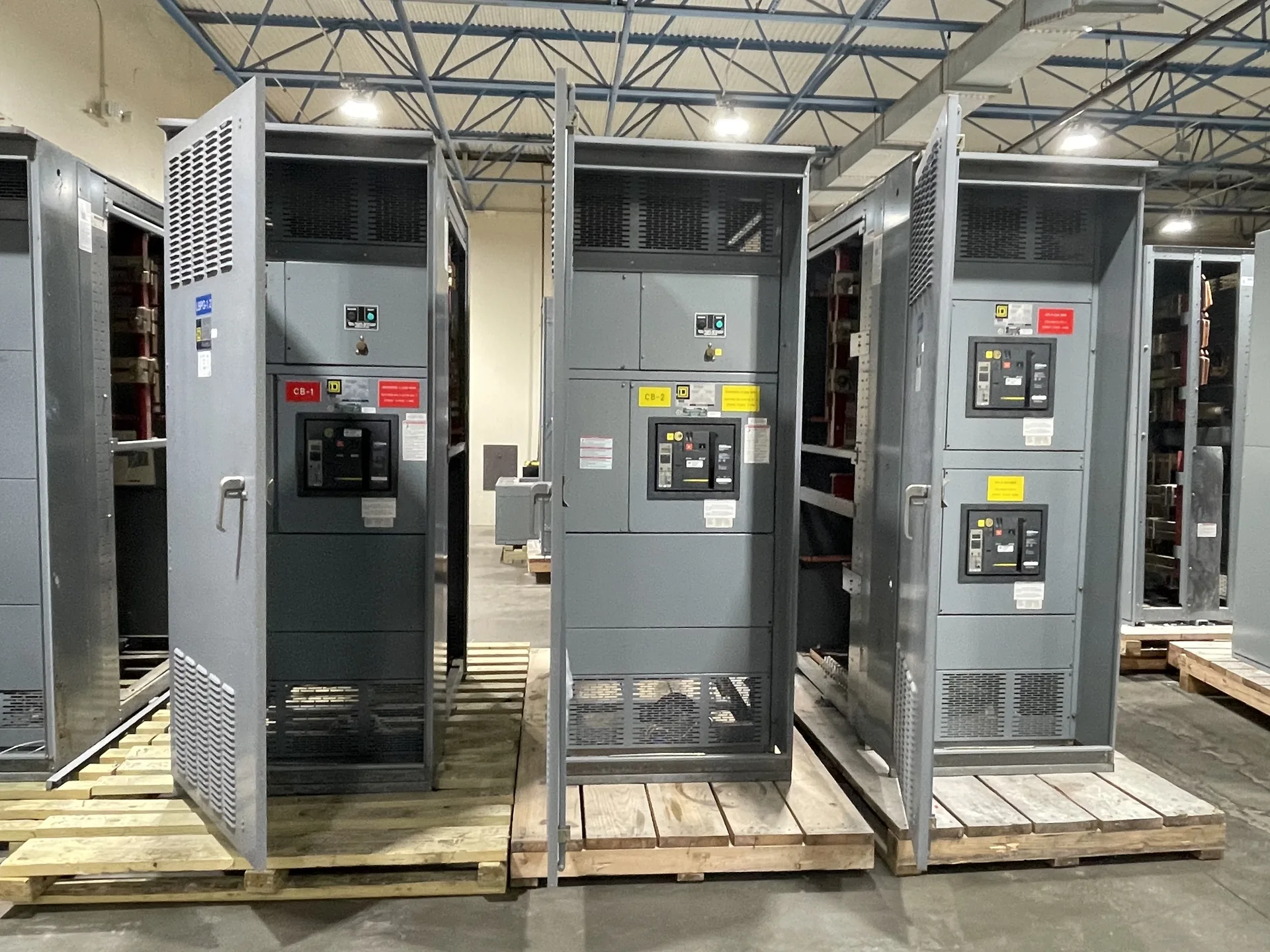
Power distribution, with purpose.
Searching for switchgear suppliers near me is a practical way to start a purchase, but proximity alone does not tell you whether a supplier can build the equipment your project requires. For buyers in Dallas–Fort Worth, compare how a manufacturer handles engineering questions, configuration, documentation, delivery coordination, and support from quote through shipment. A supplier can serve the region without having a local factory; clarify what support is available and which responsibilities remain with your project team.
Separate service coverage from physical location
Ask what “serving Dallas–Fort Worth” means in operational terms. Does the supplier prepare a custom equipment proposal from your drawings, resolve specification questions with your engineers, provide submittal documents, and coordinate shipment to the project site? Confirm the limits of that support before comparing offers. A manufacturer’s ability to ship equipment does not, by itself, establish that it will provide field service, installation, commissioning, or on-site troubleshooting.
Location can still affect planning, particularly for freight, receiving, and schedule coordination, but an assumed local presence is not a substitute for clear commitments. Request the proposed delivery basis, who arranges transportation, what the shipment includes, and how schedule updates will be handled. If your project depends on local installation or startup resources, identify those needs separately and confirm who will furnish them; do not assume they are included with an equipment order.
Test the supplier’s fit with your one-line and operating needs
A useful first comparison is whether the supplier can interpret the project’s electrical requirements rather than simply quote a broad equipment category. Provide the one-line diagram and identify the service characteristics, connected loads, source arrangement, normal and emergency operating modes, and any future expansion needs. Explain whether the equipment must interface with generators, transformers, transfer equipment, motor control centers, or building-management and supervisory systems. These details can change lineup arrangement, controls, and connection requirements.
Be precise about voltage language. State the system’s nominal voltage and the equipment rating requested, rather than treating them as interchangeable. Identify continuous current, available fault current or required short-circuit rating, protective-device requirements, enclosure and environmental conditions, and any metering or communications needs. The manufacturer should confirm that the proposed configuration and components are suitable for the specific application. Ratings, component availability, standards, and any required U.S.-origin provisions must be reviewed for the actual order.


Compare engineering support through the submittal stage
For a custom build, ask how the supplier will turn project documents into a reviewable proposal and what information it needs before design can proceed. Check whether the quote identifies lineup sections, main and feeder devices, bus requirements, control features, dimensions, cable entry assumptions, and connection interfaces. Missing assumptions can surface later as drawing revisions, added coordination, or equipment that conflicts with room layouts and upstream or downstream gear.
Confirm the expected document set and review process before placing an order. Depending on the project, you may need outline drawings, connection details, device schedules, control diagrams, or other submittals for approval. Ask who resolves technical comments and how approved changes are recorded. UL 891 applies to low-voltage switchboards; it is not a general listing for medium-voltage equipment. Any requested standard or certification claim should be verified for the specific assembly and scope rather than inferred from a product category.
Evaluate delivery planning as part of supplier support
A shorter lead time may be a goal, but it should not be treated as a guaranteed date without order-specific confirmation. Ask what schedule the supplier is proposing, when that schedule begins, and which inputs or approvals can affect it. Custom configurations, selected protective devices, control components, drawing approval, and changes after release may all affect timing. Compare the quoted schedule alongside its assumptions, not as a standalone promise.
For a Dallas–Fort Worth project, confirm that the delivery plan matches the site’s receiving conditions. Share the requested delivery window, access constraints, unloading arrangements, storage limitations, and any sequence requirements for multiple sections or lineups. Establish who will track shipment status and who must be available to receive and inspect the equipment. These details help avoid a mismatch between a completed shipment and a site that is not prepared to accept it.
Make quote requests comparable and complete
A useful request for quotation includes the current one-line diagram, load and fault information, requested equipment type, nominal system voltage, required equipment rating, and the applicable project specifications. Include the desired lineup arrangement, incoming and outgoing connection details, device and metering schedules, control or communications requirements, environmental conditions, and any constraints on footprint or cable access. Note the project location, target delivery window, submittal milestones, and required origin or standards provisions.
Tell suppliers which items are firm and which are open to engineering review. If a drawing is preliminary, label it accordingly and identify decisions still pending, such as available fault-current data or preferred device arrangements. Ask each supplier to state exclusions, assumptions, required customer-furnished information, and the basis for the proposed configuration. A complete, consistent request makes differences in scope easier to see and reduces the risk of comparing a fully engineered offer with a budgetary estimate.
Review the offer for responsibilities and order risks
Before selecting a new-equipment supplier, read beyond the headline price and delivery estimate. Check that the proposal aligns with the requested electrical ratings, interfaces, enclosure conditions, and project documents. Verify the exact device selections and any stated exceptions, and confirm whether the offered assembly’s standards or certification status meets the project requirement. Do not assume that a component’s rating automatically establishes the rating of the complete assembly.
For a custom manufacturer, clarify how changes are handled after approval, what records accompany the shipment, and how the buyer should raise a technical or shipping issue. Ask whether warranty terms, spare-parts information, and operating documentation are included or separately specified. The best fit is the supplier whose written scope addresses the project’s real constraints, whose engineering assumptions can be reviewed, and whose delivery and support responsibilities are clear—not simply the supplier that appears closest in a search result.
Specifications & planning
Review the details that matter for your application. Final specifications and availability should be confirmed for your project.
| Evaluation factor | What to confirm |
|---|---|
| Service coverage | Quote, engineering, documentation, and shipment support included in writing |
| Technical fit | System data, equipment ratings, interfaces, and project requirements reviewed |
| Schedule | Proposed lead time, starting point, approval dependencies, and shipment plan |
| Order scope | Assumptions, exclusions, submittals, standards, and customer responsibilities |