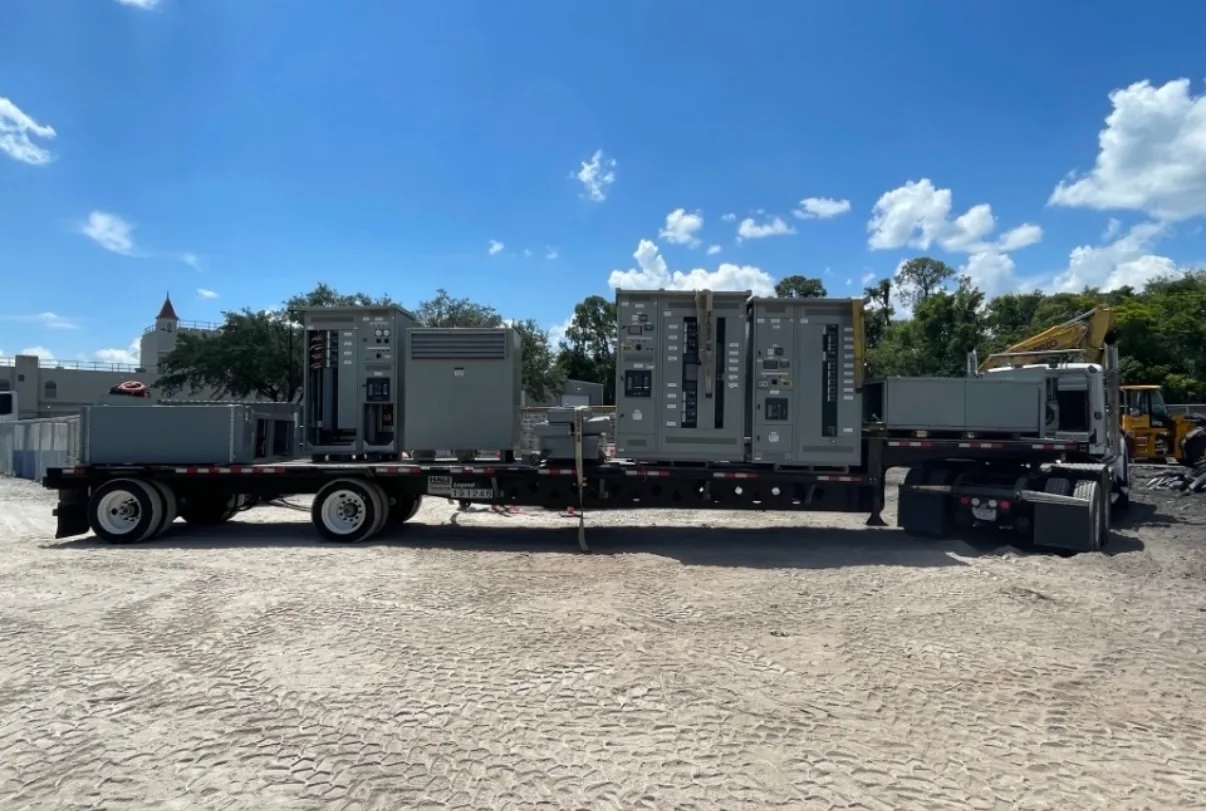
Power distribution, with purpose.
A useful switchgear price starts with a defined application, not just a voltage and an ampere rating. Share the project documents and operating requirements available so the manufacturer can identify the equipment scope, clarify assumptions, and price a new build against your actual needs. Early detail helps avoid a quote that looks comparable on paper but omits important interfaces or options.
Define the equipment and project boundary
Begin by describing what you need priced: a low-voltage switchboard, medium-voltage switchgear, or another assembly, along with the function it performs in the electrical system. Explain whether the request covers a complete lineup, a replacement section, a main-and-distribution arrangement, or equipment coordinated with other packages. Identify the intended installation setting and the project stage, such as budget planning, design development, or a purchase-ready specification. These details establish whether the quote should be preliminary or based on a defined configuration.
Make the supply boundary explicit. State which items the new equipment must include and which will be provided by the purchaser or another contractor. For example, identify expectations for breakers, metering, protective relays, control power, communications hardware, bus connections, and transition sections. Clarify whether installation, field wiring, commissioning, or engineering services are part of the request; do not assume they are included in an equipment quotation. A clear boundary lets reviewers identify exclusions before they become schedule or cost surprises.
Send ratings and system information
Provide the system nominal voltage, frequency, phase and wire arrangement, and the equipment ratings called for by the design. Include the available fault-current information or required short-circuit rating, the source and transformer data used to establish it, and any coordination study or one-line diagram available. Nominal system voltage and equipment maximum rating are related but are not interchangeable; the applicable rating must be confirmed for the specified application. If fault data is still under study, label it preliminary so the quotation can identify the assumption.
State continuous current requirements for mains, ties, and feeder devices, plus the load characteristics that affect configuration. Motor starting, non-linear loads, future capacity, utility requirements, or emergency and standby sources can change the selection and arrangement. Include environmental and installation constraints such as indoor or outdoor use, ambient conditions, elevation, enclosure needs, and space limits when known. Ratings, component availability, applicable standards, and any U.S.-origin requirements require confirmation for the specific order rather than assumption from a general description.


Describe layout, connections, and interfaces
A one-line diagram is a strong starting point, but it does not answer every physical question. Share lineup dimensions or room constraints, preferred access and cable-entry direction, incoming and outgoing conductor arrangements, and bus or conduit connection expectations. Note adjacent equipment that affects clearances or transitions, including transformers, motor-control equipment, distribution panels, or an existing lineup. If drawings are incomplete, identify what is fixed and what remains open to engineering review.
Interfaces often determine whether two apparently similar quotes are truly comparable. Specify breaker type and drawout expectations where applicable, control-voltage requirements, metering functions, relay requirements, and communications protocols or network connections. Explain how the equipment must coordinate with upstream and downstream devices and whether protective-device settings or coordination documentation are required. Identify purchaser-furnished devices and required terminal points. Missing interface details may not prevent an initial budget quote, but they should be listed as assumptions and resolved before release for manufacture.
Separate required scope from options
Mark which requirements are mandatory and which are preferences or alternates. That distinction helps the manufacturer price a compliant base configuration without silently treating every possible feature as required. For instance, identify required metering accuracy or communications functions separately from optional monitoring, spare capacity, or future feeder provisions. If the project specification names particular components or acceptable manufacturers, provide the relevant sections and indicate whether substitutions are allowed.
Ask for alternates to be shown as separate scope when they could affect cost or delivery, rather than blending them into one unexplained total. Custom builds and American components may be considered for a project, but suitability, component availability, and any domestic-origin requirement must be checked against the actual bill of material and procurement rules. A shorter lead time can be a planning goal, not a guarantee; requested ship dates, approval cycles, and long-lead components should be visible in the inquiry so feasibility can be assessed.
Make the quotation usable for comparison
Send the latest revision of the specification, one-line diagram, equipment schedule, and relevant coordination or architectural drawings, and label each document with its revision and date. Identify the project location for delivery planning, including Dallas–Fort Worth when that is the destination, without assuming that service to the region means a local factory or installation service. Give the requested delivery window and any required submittal milestones. If the documents conflict, point out the known discrepancy instead of asking a reviewer to guess which requirement controls.
When the quotation arrives, compare its stated scope and exceptions against the request, not just its headline price. Check that the lineup arrangement, ratings, included devices, interfaces, documentation, and delivery assumptions are stated clearly. Ask for clarification where a critical item is marked by assumption, exclusion, or engineering review. The final configuration, ratings, short-circuit capability, standards basis, and component selections should be confirmed for the order before approval; a preliminary price is not a substitute for approved design information.
Specifications & planning
Review the details that matter for your application. Final specifications and availability should be confirmed for your project.
| Evaluation factor | Information to provide |
|---|---|
| System basis | Nominal voltage, frequency, phase, fault data, and required ratings |
| Physical fit | Room limits, lineup arrangement, access, and cable-entry preferences |
| Functional scope | Mains, feeders, protection, metering, control, and communications |
| Quote assumptions | Document revisions, open design items, options, and requested delivery window |