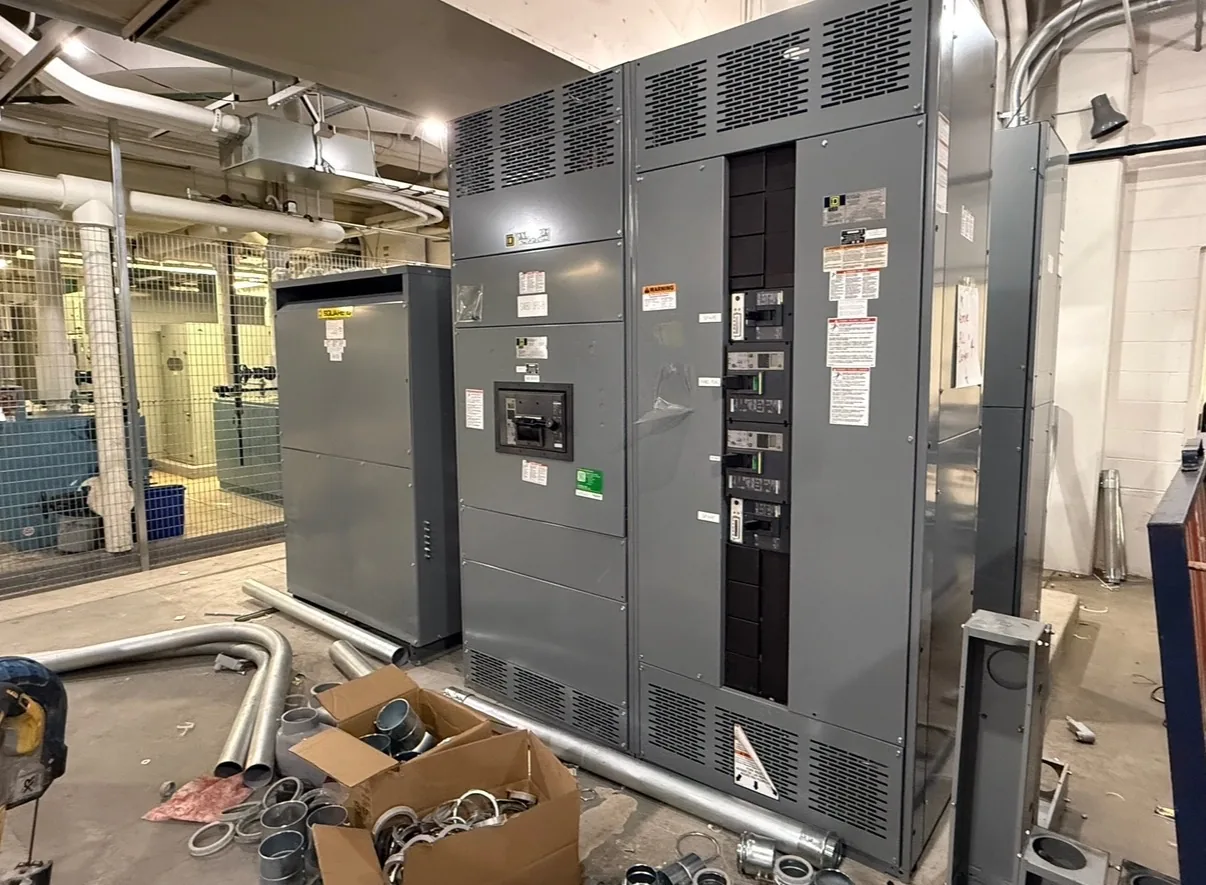
Power distribution, with purpose.
Choosing where to buy new switchgear starts with fit, not a headline price or a broad catalog. The right manufacturer can evaluate your one-line diagram, operating conditions, interfaces, and schedule, then define what the proposed equipment includes—and what still requires confirmation. For buyers in Dallas–Fort Worth or elsewhere in the United States, a clear review process helps expose scope gaps before they become procurement delays.
Start with the equipment boundary
Before comparing suppliers, establish exactly what you are buying. A project may call for a low-voltage switchboard, a medium-voltage lineup, or several connected assemblies, and those terms are not interchangeable. Identify the system’s nominal voltage and frequency, the equipment’s required maximum voltage rating, bus arrangement, incoming and outgoing circuits, and the intended service configuration. If the scope also includes transformers, protective relays, metering, or downstream distribution, state whether those items are part of the purchase or supplied by others.
A manufacturer should be able to review the specified boundary and identify assumptions that need resolution. For a low-voltage switchboard, UL 891 may be applicable when the project requires it and the particular assembly can be provided to that requirement; it does not apply as a general listing for medium-voltage switchgear. Treat standards, ratings, and any required listing as project-specific acceptance criteria. Ask the supplier to identify the applicable documents and confirm the proposed configuration rather than relying on a broad statement about a product family.
Compare engineering response, not just quotations
A useful quotation makes its basis visible. It should map the requested lineup to a defined number of sections, identify major devices and accessories, and state which customer requirements are included, excluded, or awaiting clarification. Compare proposals against the same revision of the one-line diagram and specifications. Otherwise, an apparently lower offer may omit metering, control wiring, barriers, special enclosure details, or coordination with equipment at the lineup’s boundary.
Ask how design questions are handled after the initial review. Changes to an interrupting device, bus arrangement, cable entry, control scheme, or physical dimensions can affect more than one drawing and may alter availability or schedule. A manufacturer building custom equipment can assess project-specific configurations, but that does not make every requested combination feasible. The buyer should expect engineering review of compatibility, ratings, and interfaces before treating a preliminary configuration as final.


Send a complete quote package
To get a meaningful quote, provide the latest one-line diagram, equipment schedule, applicable specifications, and any required drawing or submittal format. Include nominal system voltage, frequency, phase and wire details, grounding method, available fault-current information, required short-circuit rating, and protection or coordination requirements. Identify the number and purpose of each circuit, device functions, metering needs, control power, communications protocols, and any spare or future provisions. If values are not yet established, label them as open items rather than allowing a supplier to assume them.
Physical and delivery information matters as much as the electrical schedule. Supply available room dimensions, access and handling constraints, cable approach and termination expectations, environmental conditions, enclosure requirements, and connection details for adjacent equipment. State the project location, requested delivery window, ship-to requirements, and who will review drawings and approve deviations. For a DFW project, local site constraints still need to be documented; serving the region does not establish a manufacturer’s local facility, installation role, or project history.
Check components, origin, and documentation
Ask what major components are proposed and how substitutions are handled. Device models, control components, and accessory availability can change, so a quotation should distinguish specified selections from alternatives that remain subject to approval. If the project requires American components or has domestic-content conditions, explain the exact requirement and request confirmation for the specific order. “American components” is not a substitute for identifying which items must meet an origin threshold or how that requirement will be documented.
Documentation is another practical way to evaluate a supplier. Confirm what drawings, bills of material, ratings information, operating documentation, and test records are included in the submittal and closeout scope. Check that the proposed short-circuit rating and protective-device details align with the project’s available fault current and coordination basis, subject to engineering review. Do not treat a nominal voltage label or a general standards reference as proof that every configuration meets the job’s acceptance criteria.
Make schedule and commercial risk explicit
A shorter lead time can be a goal, but no buyer should rely on an unqualified promise before the design and component scope are settled. Ask what event starts the quoted schedule, which approvals or customer-furnished inputs are required, and whether the estimate depends on component availability. Clarify how drawing revisions, delayed approvals, substitutions, and shipping arrangements affect the target date. A realistic comparison separates manufacturing duration from engineering review, customer approval, and transit.
Before issuing a purchase order, reconcile the final proposal with the project specification and record accepted exceptions. Confirm the revision level, quantities, accessories, delivery terms, documentation, and responsibility for each interface. A manufacturer that builds new equipment can be evaluated on how clearly it defines those commitments and flags unresolved questions—not on assumptions about guaranteed availability, a fixed price, or a delivery date that has not been confirmed for the order.
Use a consistent supplier scorecard
A simple comparison framework helps procurement and engineering reach the same decision. Score each proposal for technical completeness, clarity of exceptions, component and origin documentation, schedule basis, and responsiveness to open questions. Weight the factors according to project risk: a constrained room may make dimensional confirmation critical, while a replacement project may depend on matching existing interfaces and minimizing outage exposure. Keep the evaluation tied to the actual specification, not a generic impression of the supplier.
For nationwide shipments, also verify packaging and delivery assumptions against the destination, receiving hours, unloading arrangements, and route or site restrictions. Those details can affect how equipment reaches the project even when the electrical design is settled. Buyers in Dallas–Fort Worth should use the same disciplined review as buyers elsewhere: compare documented scope, request clarification where the proposal is conditional, and release the order only after ratings, standards, components, and interfaces are confirmed for the specific build.
Specifications & planning
Review the details that matter for your application. Final specifications and availability should be confirmed for your project.
| Evaluation factor | What to confirm |
|---|---|
| Technical fit | Configuration, system nominal voltage, equipment rating, and interfaces |
| Fault duty | Required short-circuit rating and engineering basis |
| Scope clarity | Included devices, accessories, drawings, and stated exceptions |
| Schedule basis | Approval milestones, component availability, and delivery assumptions |