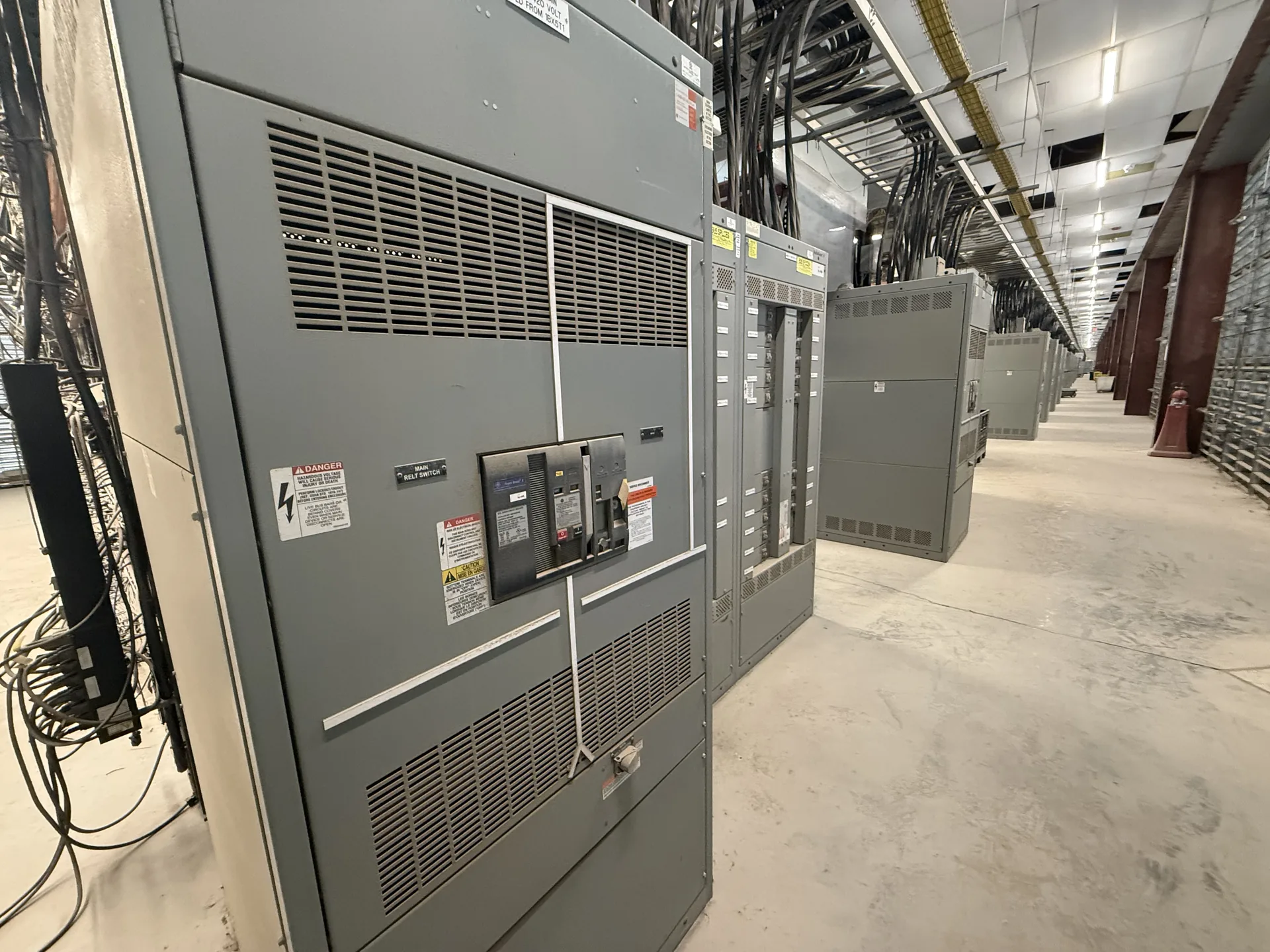
Power distribution, with purpose.
Wholesale switchgear procurement is less about finding the largest catalog and more about coordinating a defined quantity of new equipment with a project’s electrical design, schedule, and delivery plan. We manufacture and supply new custom-built gear, with American components and shorter lead time as a goal. Actual availability depends on the requested configuration, components, and order timing, so buyers should confirm it against a complete, project-specific scope before committing.
Define the package before requesting a wholesale quote
Start with a schedule that identifies each lineup, section, and major component, rather than a single total quantity. State whether the purchase covers switchboards, switchgear, distribution sections, or a coordinated package, and distinguish identical assemblies from variants. A quantity of ten units does not necessarily mean ten interchangeable units: service entrance duties, feeder arrangements, control schemes, and connection directions can differ across a project.
For a useful quote, provide one-line diagrams, equipment schedules, applicable specifications, and the required ship-to location. Include the number of units, desired delivery sequence, requested ship date, and any bid or approval milestones. If the project is phased, describe the quantities and target dates by phase. This helps assess whether the requested production plan is practical without treating an unconfirmed schedule as guaranteed availability.
Match the gear to the electrical design
Procurement documents should identify system nominal voltage and the required equipment class separately. Include phase and wire configuration, frequency, continuous current, bus arrangement, and the specified short-circuit rating and duration where applicable. For medium-voltage equipment, state the nominal system voltage and the equipment maximum rating required by the design; classes such as 5 kV, 15 kV, 27 kV, and 35 kV are commonly medium voltage, but the right selection depends on the application and engineering documents.
Call out the protective devices and functions needed, including breaker or switch type, trip or relay requirements, metering, control power, and any communication interfaces. Note environmental conditions, enclosure requirements, seismic or other project criteria, and applicable standards. UL 891 applies to low-voltage switchboards, not medium- or high-voltage switchgear. Standards, ratings, component availability, and any U.S.-origin requirements must be confirmed for the specific order and assembly.


Check interfaces that affect quantity and fit
A wholesale package can be electrically correct yet difficult to receive or install if its physical interfaces are unclear. Supply available room dimensions, access constraints, cable-entry direction, conductor termination details, floor or base requirements, and lineup orientation. Identify whether sections must connect to existing equipment or to gear from another supplier, and provide verified interface drawings when available. Compatibility should be reviewed rather than assumed from similar product descriptions.
Also clarify the scope boundary. Identify which items are included in the requested supply, such as transition sections, bus connections, control wiring, metering provisions, or accessories, and which are by others. If matching an existing installation, provide nameplate information, drawings, and photographs where useful; these are reference materials, not proof that a particular interface will fit. Early review can reveal mismatches before a large quantity is released for production.
Treat availability as a confirmed project condition
Availability is configuration-specific. A standard component may be obtainable while a required breaker, relay, enclosure detail, or custom bus arrangement has a different sourcing timeline. Ask which parts of the proposed package are currently available, what remains subject to confirmation, and when availability will be rechecked. For a multi-unit order, confirm whether the schedule applies to the full quantity or only an initial release, and whether later phases depend on the same components.
Compare a proposed schedule with the project’s approval process, not just its desired delivery date. Drawings may need review, revisions, and written approval before production can proceed. Changes to ratings, layouts, or components after approval can affect timing and cost. Shorter lead time is a goal, not a guarantee; obtain a project-specific schedule and documented assumptions before relying on it for construction sequencing or energization planning.
Coordinate delivery across Dallas–Fort Worth and beyond
For projects in Dallas–Fort Worth or elsewhere, provide the delivery site, receiving hours, unloading arrangements, site access limits, and whether shipments need to arrive in a particular order. Specify if the project has restricted staging space or requires separate deliveries for different buildings or phases. These details matter for large assemblies, where transport configuration and the receiving plan should be coordinated before shipment.
Ask how the proposed packaging and shipment plan aligns with the approved lineup and the site’s handling constraints. Confirm who is responsible for receiving inspection, storage, and reporting transit damage, and whether the requested delivery sequence is feasible for the order. Serving a regional or nationwide project does not imply a local manufacturing facility or installation service; verify the actual supply scope and shipping arrangements for your purchase.
Evaluate the supplier on scope clarity and documentation
For a quantity purchase, compare quotations on equivalent scope, not headline price alone. Check that each quote addresses the same equipment schedule, requested options, exclusions, approval documents, delivery assumptions, and component substitutions. Ask how changes are handled and which ratings or details remain subject to engineering review. A quotation that clearly identifies open items is more useful than one that implies unverified availability or universal compliance.
We build new equipment to project requirements and can discuss custom configurations, American components, and a shorter lead time as a goal. Before placing an order, have the responsible project engineer review the final drawings and confirm electrical ratings, interfaces, standards, and origin requirements. The following evaluation factors are prompts for procurement review, not offered ratings or a representation of current stock.
Specifications & planning
Review the details that matter for your application. Final specifications and availability should be confirmed for your project.
| Evaluation factor | What to confirm |
|---|---|
| Order quantity | Unit count, lineup variations, and release phases |
| Electrical scope | Nominal voltage, equipment class, ratings, and protective functions; subject to engineering review |
| Availability | Configuration-specific component status and schedule confirmation |
| Delivery plan | Ship-to details, receiving constraints, and requested sequence |