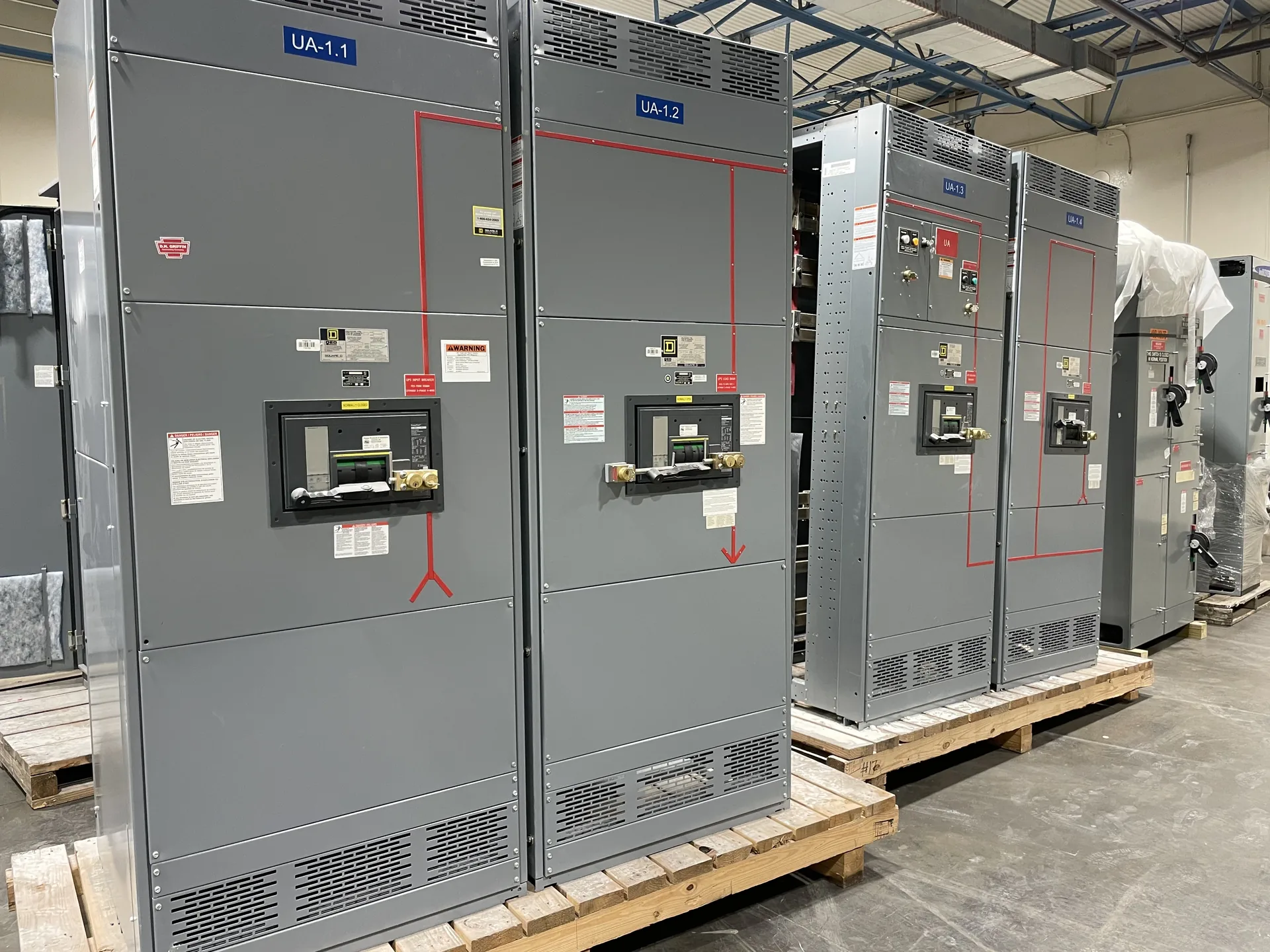
Power distribution, with purpose.
A switchgear project in Grapevine starts with the building’s power needs and the conditions at its exact parcel—not an assumption about local utility service, permitting, or delivery access. For a commercial facility, early coordination can help align equipment design, critical-load priorities, and the delivery plan before drawings and procurement are finalized.
Define facility needs and critical loads
Begin by documenting the facility’s use, existing electrical distribution, planned expansion, and operating constraints. Identify loads that must remain available during an outage or staged changeover, such as life-safety systems, critical process equipment, refrigeration, data systems, or essential building services. Their priority should come from the owner’s operating and continuity requirements, not from an assumed standard order.
A one-line diagram, service information, load data, and a description of normal and emergency operating modes give the design team a useful starting point. Clarify whether the project replaces existing gear, adds distribution, or serves new construction, and whether future capacity is a requirement or merely a possibility. These distinctions affect section arrangement, feeder provisions, controls, and the space needed for safe access and maintenance.
Confirm parcel jurisdiction and utility interfaces
Grapevine service boundaries, permitting responsibility, and utility arrangements must be confirmed for the actual project parcel. Before publication or design reliance, verify the current official City of Grapevine permitting and development resources, determine which department reviews the proposed electrical work, and ask whether separate building, fire, inspection, or other approvals apply. Do not infer jurisdiction from a mailing address or city name alone.
Likewise, identify the electric utility serving the parcel through current official utility resources or direct confirmation, then establish its requirements for service voltage, metering, transformer interface, fault-current data, and service equipment. Utility ownership boundaries and approval processes can shape the switchgear specification. Record the source and date of key requirements, since preliminary utility information may need confirmation before equipment design is released.


Resolve electrical ratings and design tradeoffs
Ask the engineer of record to establish the system’s nominal voltage, equipment maximum rating, continuous-current needs, and available short-circuit current at the point of connection. Nominal system voltage and equipment maximum rating are related but are not interchangeable. The specified short-circuit rating and protective-device coordination must suit the actual system study and utility data; they should not be selected by copying a rating from another project.
For low-voltage distribution, a UL 891 switchboard may be relevant when the design and applicable requirements call for that type of assembly, but it is not a general designation for medium-voltage equipment. Section layout, main-device configuration, feeder count, metering, control power, and future provisions all affect footprint and interfaces. Confirm clearances, cable-entry direction, bus arrangement, environmental conditions, and the connection to upstream and downstream equipment during engineering review.
Plan delivery around site and operating limits
A restricted delivery window can influence how equipment is divided, shipped, received, and moved into position. Provide the receiving site’s permitted hours, vehicle restrictions, unloading method, dock or gate dimensions, laydown limits, route to the electrical room, and any elevator, corridor, or floor-loading constraints. Confirm who controls access and whether the site requires advance notice, escorts, insurance documentation, or a scheduled shutdown.
Coordinate the proposed shipping configuration with the installer or other party responsible for receiving and setting the equipment; do not assume the manufacturer provides installation or site handling. Larger assemblies may need to be evaluated for transport dimensions, section weights, doorway access, and whether field connections are practical. Any split, shipping, or reassembly approach needs engineering review so it does not conflict with the approved design, connections, or site safety plan.
Prepare a useful quote and design handoff
A quote request should include the latest one-line diagram and specifications, equipment schedule, system and short-circuit data, required device and feeder details, metering and control requirements, and any project-specific standards or submittal needs. Add the requested quantity, target decision and delivery dates, shipping destination, receiving restrictions, and the name or role of the person coordinating engineering questions. Mark preliminary values clearly instead of presenting them as approved requirements.
The manufacturer can review the requested new custom build and identify information that needs clarification before pricing or design proceeds. Share approved drawings and utility requirements as they become available, then route technical questions through the project’s designated engineer or electrical contractor. American components and a shorter lead time may be project goals, but component availability, schedule, U.S.-origin requirements, ratings, and standards must be confirmed for the specific order; none should be assumed from an initial inquiry.
Keep decisions traceable through procurement
Before release, reconcile the quote, specification, reviewed drawings, utility requirements, and site delivery plan. Assign responsibility for resolving discrepancies in voltage, device ratings, metering, control interfaces, or shipping configuration. Documenting which party approves each decision reduces the risk of ordering equipment around outdated utility data or an unverified site constraint.
For a Grapevine commercial project, the practical handoff is a coordinated set of facility requirements, parcel-specific jurisdiction and utility confirmations, engineering-approved electrical criteria, and receiving instructions. A Dallas–Fort Worth destination alone does not establish a local office, installation commitment, or guaranteed service territory. Final capabilities, configuration, schedule, and compliance remain subject to project review and the terms confirmed for the order.
Specifications & planning
Review the details that matter for your application. Final specifications and availability should be confirmed for your project.
| Evaluation factor | Information to confirm |
|---|---|
| Facility priorities | Operating modes, critical loads, and future expansion assumptions |
| Parcel requirements | Applicable city review, permits, inspections, and utility serving the site |
| Electrical criteria | Nominal voltage, equipment maximum rating, current, and available fault current |
| Delivery constraints | Receiving hours, access route, unloading plan, and site handling responsibility |