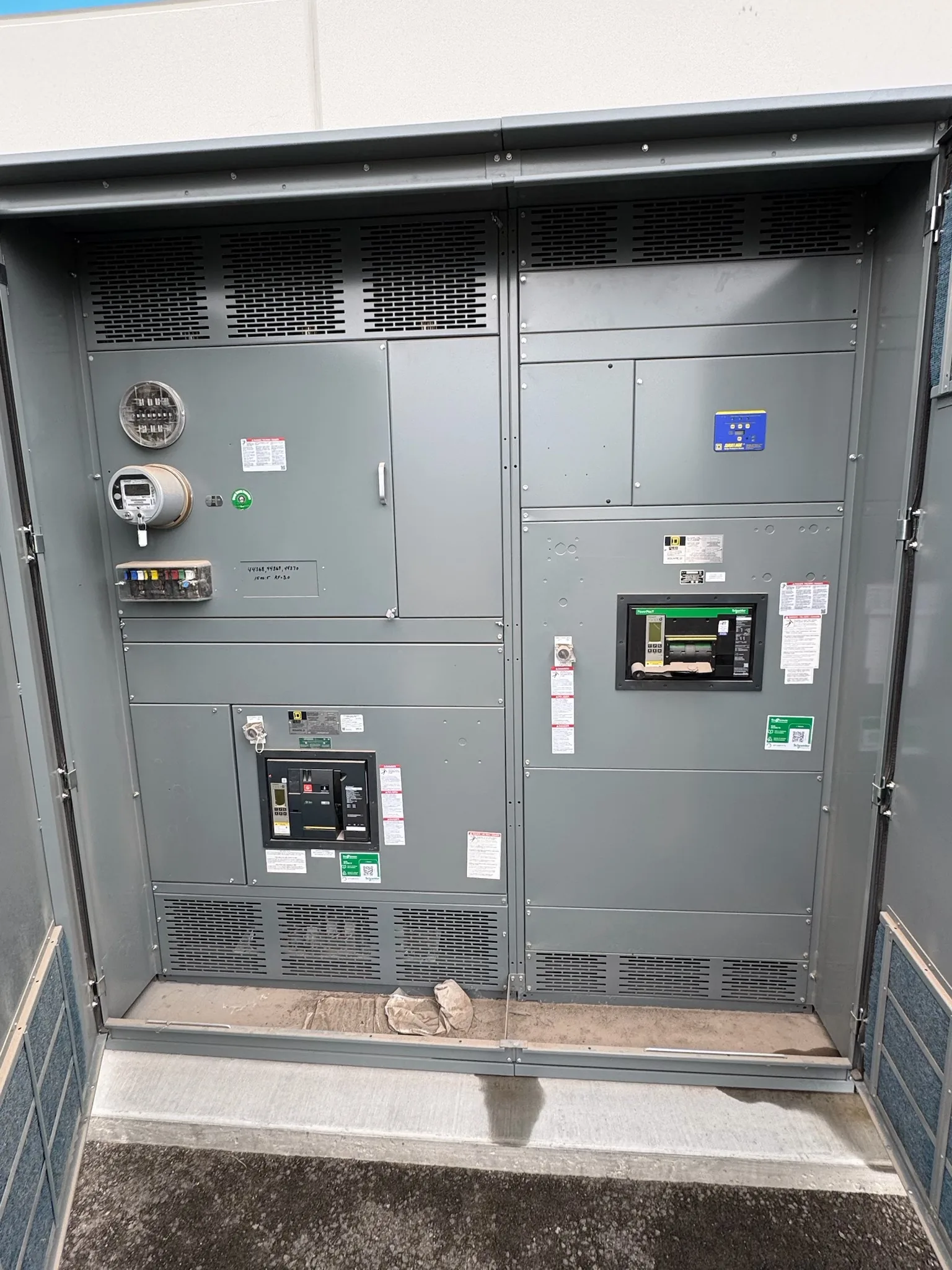
Power distribution, with purpose.
Existing switchgear can sometimes be expanded, but a vacant compartment or unused breaker space alone does not establish that an addition is safe or compatible. The decision depends on the assembly’s verified ratings and construction, the proposed load, the physical and electrical interfaces, and the approvals required at the site. A qualified professional should evaluate the existing equipment and proposed modification before a manufacturer quotes or builds new equipment.
Start with the bus and system ratings
The first question is whether the existing bus can support the added demand, not merely whether a new breaker can fit. Review the switchgear nameplate and original drawings for bus ampacity, voltage and frequency, short-circuit rating, and the ratings of the main device and relevant feeder sections. Compare those details with the proposed load, expected operating conditions, available fault current, and the system’s protection scheme. A rating printed on one component does not automatically apply to the entire assembly.
System nominal voltage and equipment maximum voltage rating are distinct specification details. The proposed equipment must be appropriate for the system and its conditions, while interrupting and withstand capabilities must be evaluated for the actual fault duty. If records are missing, altered, or inconsistent with the installed lineup, do not assume the lowest or most familiar rating is sufficient. A qualified engineer or other authorized professional should establish what can be relied upon and whether the existing gear can remain in service as designed.
Confirm construction and physical compatibility
A new section must match more than the lineup’s overall appearance. Manufacturers use different bus arrangements, compartment dimensions, barriers, mounting methods, cable-entry locations, and connection details. Even equipment with similar labels may not have interchangeable bus joints, breaker cells, or control interfaces. The review should identify the original manufacturer and model, section arrangement, enclosure type, and any previous modifications, then compare them against the proposed equipment’s drawings and documented interface requirements.
Physical constraints can decide whether an expansion is practical. Measure the available footprint and working clearances, and document access paths, overhead restrictions, cable routing, and the direction in which the lineup could be extended. Check whether adding a section affects doors, barriers, ventilation, grounding, or access to existing devices. In Dallas–Fort Worth or elsewhere, the site’s actual dimensions and delivery route matter more than a general assumption that a standard section will fit.


Establish whether space is genuinely available
An apparently empty cell may be reserved for a particular device or may lack the bus, supports, shutters, wiring, or protective features needed for the proposed function. Likewise, spare bus capacity does not mean spare physical capacity: the room may have no space for another section, or existing cable and conduit routes may obstruct an extension. Confirm the intended breaker type and frame, connection arrangement, trip unit or relay requirements, and the equipment’s applicable enclosure and environmental conditions.
Consider whether the project requires an addition to the lineup, replacement of a section, or a separate new assembly. A separate lineup may reduce dependence on an undocumented legacy interface, but can require additional space, feeders, coordination, and shutdown planning. Replacing or modifying existing sections may preserve a more unified arrangement, yet can introduce greater compatibility and outage concerns. The preferred option depends on the site, the load, and engineering review rather than on a universal rule.
Use drawings, records, and authorization
Useful records include clear nameplate photographs, the one-line diagram, equipment schedules, original or current switchgear drawings, breaker and protective-device information, and documented field changes. Include the proposed load and its operating profile, the source and system voltage, known available fault current, grounding arrangement, and any owner or utility requirements. If the available records do not show the bus or short-circuit rating, identify that gap explicitly instead of estimating from cabinet size or breaker handles.
The equipment owner or authorized representative should approve access to records and any proposed change. Depending on the project, the design may require review by an electrical engineer, the equipment manufacturer, the authority having jurisdiction, the utility, or other parties responsible for system protection and safety. Field verification and outage planning must be handled by qualified personnel under applicable site procedures. A manufacturer’s quote or drawing review cannot substitute for authorization, a site assessment, or approval required for the installation.
Example: adding a feeder to an existing lineup
Consider a hypothetical facility that wants a new feeder for added machinery and sees an unused position in its switchboard. The owner supplies a nameplate image, the lineup drawings, breaker details, the new load characteristics, and available fault-current information. Review then shows whether the bus and protective arrangement can accommodate the load, whether the position accepts the intended device, and whether cable access and clearances work. The example is illustrative only; the actual decision depends on verified equipment records and engineering review.
If the existing position is not suitable, choices could include a compatible new section, a replacement assembly, or a separate switchboard designed for the new distribution need. A manufacturer that builds new equipment can assess a custom assembly against supplied project requirements and can make shorter lead time a goal, without promising a schedule before scope and component availability are confirmed. UL 891 applies to low-voltage switchboards; it is not a general listing for medium-voltage switchgear, and any applicable standards, listing status, ratings, and US-origin requirements must be confirmed for the specific order.
Prepare a useful request for a quote
For an initial review, provide the equipment manufacturer, model and serial information where available, nameplate details, lineup dimensions, photographs of the full lineup and relevant compartments, and the latest drawings. Add the proposed feeder or load requirements, system nominal voltage, frequency, fault-current data, desired breaker or switching function, and site constraints. Identify which facts are measured, documented, or still unknown. This helps distinguish a feasible extension from a concept that needs additional engineering or field investigation.
A complete request should also state the required delivery location, project schedule, applicable owner specifications, documentation expectations, and who will approve the design. Do not treat a preliminary fit assessment as confirmation of a final rating or installation method. All ratings, short-circuit capabilities, component availability, standards, and US-origin requirements need confirmation for the specific order. New equipment can be built to defined project needs, but expansion of existing gear should proceed only after the equipment and interfaces have been verified.
Specifications & planning
Review the details that matter for your application. Final specifications and availability should be confirmed for your project.
| Evaluation factor | Information to verify |
|---|---|
| Bus and fault duty | Documented ampacity, system voltage, and short-circuit capability; engineering review required |
| Physical interface | Dimensions, bus connections, barriers, cable entry, and clearances |
| Available position | Cell or section function, device compatibility, and required internal components |
| Records and approval | Current drawings, nameplate data, owner authorization, and required professional reviews |