Power distribution, with purpose.
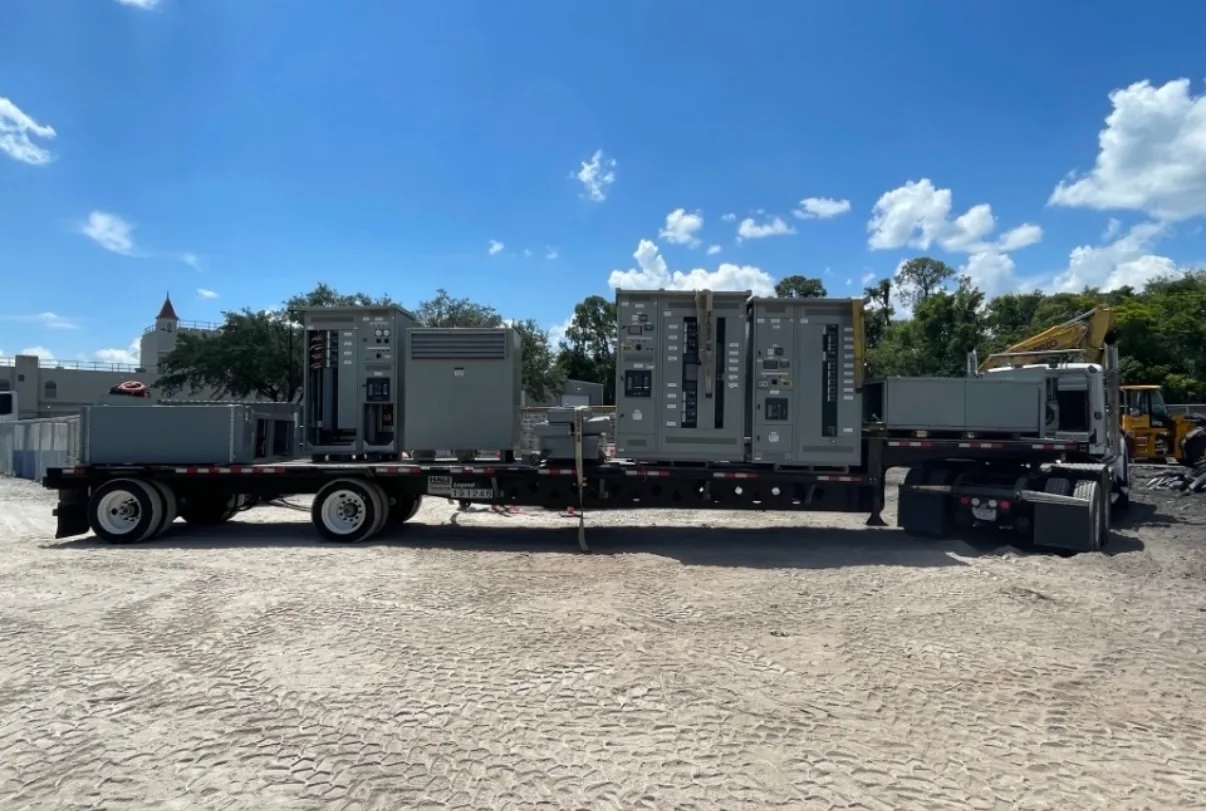
Switchgear delivery is a project interface, not simply a truck arrival. The equipment configuration determines how it can be divided and handled, while the site, carrier, and receiving crew determine whether it can be unloaded and moved safely. Clarifying those details before a new assembly is built helps the purchaser coordinate the route from shipment to final equipment location without relying on assumed dimensions or delivery timing.
Shipment dimensions start with the approved design
A shipping envelope depends on the complete assembly, not just its electrical rating. Section width and height, enclosure depth, bus arrangement, incoming and outgoing connections, metering, protective devices, and accessories can all affect overall dimensions and weight. Shipping skids, bracing, protective wrapping, and any parts shipped separately also matter. Request preliminary shipping dimensions and estimated weights for planning, then confirm the final figures against the approved, order-specific documentation before booking transport or rigging.
The route from the unloading point to the electrical room can be more restrictive than the truck route. Door openings, corridors, turns, ramps, floor loading, overhead obstructions, and available staging space may limit the size or orientation of a section that can be moved. A site plan with the receiving point and the intended path helps identify constraints early. Do not treat a catalog dimension or a preliminary estimate as a clearance guarantee; actual configuration and handling provisions must be reviewed for the specific order and site.
Section splits balance handling against field work
A multi-section switchboard or lineup may be shipped as several sections rather than one assembled unit. Section splits can reduce individual handling dimensions and weights, but they create field interfaces that must be correctly aligned, joined, and connected. The split locations should be considered alongside bus connections, shipping constraints, room access, and the planned setting sequence. A split that solves an access problem can still require adequate working room and a qualified crew to complete the assembly and verify the connections.
For example, consider a hypothetical building where the electrical room is reached through a narrow interior doorway. The purchaser and design team might compare a larger factory-assembled shipment with multiple smaller shipping sections. The smaller sections may be easier to route inside, but the team must confirm that the doorway and turns accommodate each section, that the floor can support handling loads, and that the room provides space to join the lineup. This is an illustration only; engineering review must establish actual split points, dimensions, weights, and field requirements for the ordered design.


Lifting instructions are equipment-specific
Use the manufacturer’s shipping and handling documentation for the exact assembly. It should identify applicable lifting points or other approved handling provisions and communicate relevant weight and orientation information. Do not infer lifting points from the enclosure shape, use an assumed center of gravity, or attach rigging to bus or internal components. If a section arrives with visible shipping damage, shifted bracing, or unclear handling markings, pause and obtain direction from the responsible equipment or rigging professional before moving it.
The lift plan also depends on the site and chosen equipment. A qualified rigger should evaluate the load, rigging geometry, travel path, ground or floor conditions, overhead clearances, and any need to transfer the section from a delivery vehicle to a different handling method. The manufacturer’s information does not replace that site-specific assessment. No one should attempt to move or service electrical equipment using improvised lifting methods, and delivery planning should not involve opening equipment or working near exposed energized parts.
Coordinate the carrier, site, and receiving team
Before shipment is arranged, establish who can receive the load and what the site can accommodate. Relevant details include the delivery address and access instructions, truck approach and restrictions, unloading resources, receiving hours, staging space, and the contact responsible for coordinating arrival. Confirm whether the site requires appointments, advance notices, special vehicle arrangements, or particular documentation. These conditions affect carrier planning, but they do not establish or guarantee a delivery date; timing and transport arrangements must be confirmed for the specific order.
For a project in Dallas–Fort Worth or elsewhere, provide the actual jobsite constraints rather than relying on assumptions about local access. A site may have construction gates, limited laydown area, restricted truck access, or a receiving point separated from the final room. Identify whether unloading equipment and qualified personnel are arranged by the purchaser or another project party, and resolve that responsibility before dispatch. A manufacturer can review shipment planning information for the equipment it builds, while carrier scheduling and site readiness remain project-specific coordination items.
Inspect the shipment and document exceptions
At receipt, compare the delivered packages and section identifiers with the shipping documents and approved equipment schedule. Check visible packaging for punctures, crushing, water exposure, broken restraints, or signs that a load shifted. Record the condition and any discrepancies promptly, and photograph damage before packaging is removed when practical. Note shortages or damage on the carrier’s delivery paperwork and follow the applicable claim and notification process; acceptance paperwork should not be treated as proof that the equipment is free of concealed damage.
Keep the shipment protected and secured while it awaits placement, following the supplied storage and handling instructions. A receiving check is not an electrical acceptance test and does not authorize energization. If there is a concern about damage, moisture, contamination, missing parts, or an uncertain shipment condition, have the appropriate qualified professional assess it and consult the equipment supplier before installation or use. Preserve labels and documentation so the assembly can be matched to its drawings and order records.
Information to provide before requesting a quote
Useful quote information includes the one-line diagram, system nominal voltage, equipment type and intended use, required ratings, enclosure and environmental conditions, incoming and outgoing arrangement, and any specified components or standards. For delivery planning, add the jobsite location, target receiving window if known, access route dimensions, unloading plan, destination room constraints, and any known weight or floor-loading limits. State whether the design team has identified a maximum section size or a required split. These inputs support a more relevant review; ratings, short-circuit capability, component availability, standards, and any U.S.-origin requirements must still be confirmed for the specific order.
Custom-built new equipment can be evaluated around project interfaces, and shorter lead time may be a goal rather than a commitment. UL 891 applies to low-voltage switchboards, not medium-voltage switchgear; the applicable construction and requirements depend on the ordered equipment. Engage the electrical engineer, qualified rigging professional, and site safety personnel when access, lifting, field joining, or electrical requirements need determination. Confirm final shipment dimensions, weights, split details, instructions, and delivery arrangements before making irreversible site or carrier commitments.
Specifications & planning
Review the details that matter for your application. Final specifications and availability should be confirmed for your project.
| Evaluation factor | Why it matters |
|---|---|
| Maximum access opening | Compare with confirmed section dimensions, including protective packaging and handling clearance. |
| Section weight and split | Affects unloading resources, route feasibility, and field joining scope; confirm for the ordered design. |
| Lift provisions | Follow equipment-specific instructions and have a qualified rigger assess site conditions. |
| Receiving and staging plan | Coordinate carrier access, unloading responsibility, inspection, and protected storage. |
| Delivery schedule | Confirm order-specific transport arrangements; do not assume a guaranteed arrival date. |