Power distribution, with purpose.
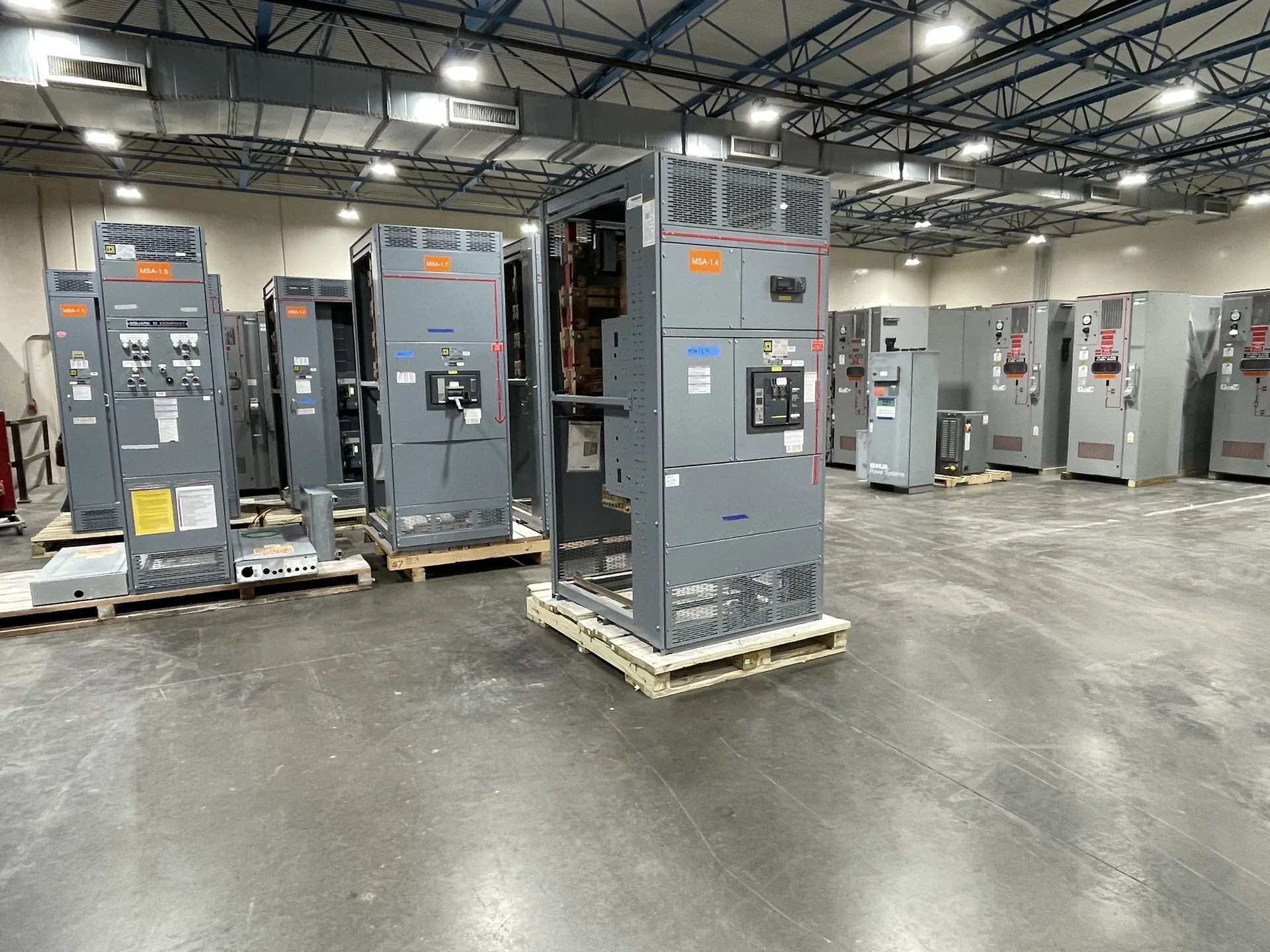
Metal-clad switchgear is a medium-voltage switchgear construction in which grounded metal barriers divide the assembly into distinct compartments. The design is intended to limit exposure between functional sections and support controlled access to withdrawable circuit breakers and other components. For a purchaser, the term describes a construction approach, not a complete performance rating: the required voltage, interrupting duty, lineup arrangement, protection scheme, and applicable standards still need to be specified and confirmed.
What “metal-clad” means in practice
In a typical metal-clad lineup, barriers separate the bus, circuit breaker, cable terminations, and low-voltage control areas. Grounded metal partitions distinguish this construction from designs that rely on shared air space or less extensive barriers. Compartment boundaries, shutters, interlocks, and doors are part of the design, but their exact arrangement depends on the equipment and its governing requirements. The name alone does not establish an arc-resistant rating or guarantee that a particular internal event will be contained.
The term is commonly associated with medium-voltage switchgear, including equipment applied at nominal system voltages such as 5 kV or 15 kV. Those nominal system values should not be confused with an equipment maximum voltage rating. A specification should state both the system conditions and the required equipment ratings, then verify that the proposed assembly and components are suitable for the actual application.
Compartments and withdrawable breakers
A withdrawable breaker can move between connected, test, and disconnected positions, subject to the design. This allows some inspection or maintenance tasks to be performed with the breaker isolated from the primary circuit, while the switchgear remains in service under appropriate operating conditions. It does not make every task safe or eliminate the need for approved procedures, qualified personnel, and an assessment of the equipment’s condition and hazards.
Compartment layout affects cable access, breaker handling, control wiring, and the space needed for installation and maintenance. Buyers should identify which devices must be withdrawable, how many feeder and tie positions are needed, and whether metering, relaying, or auxiliary equipment requires dedicated space. Interlocks and shutters should be reviewed against the intended operating sequence; the specification should not assume that a generic description of “metal-clad” defines those details.


An illustrative application and its interfaces
Consider a hypothetical industrial facility evaluating a medium-voltage lineup to supply a transformer and several downstream feeders. The design team might consider a main breaker, feeder breakers, protective relays, metering, and a bus arrangement suited to the facility’s continuity requirements. This is an example only, not a report of a completed project. The correct arrangement depends on the facility load, utility connection, fault study, operating philosophy, and applicable engineering review.
The lineup must coordinate with more than the one-line diagram. Cable entry and termination provisions, phase sequence, control power, trip and close circuits, communications, grounding, and room clearances can all affect a usable design. In Dallas–Fort Worth or elsewhere, the purchaser should provide site-specific delivery constraints and interface drawings rather than assume a local installation or a standard room arrangement. Equipment delivery does not itself establish who performs installation or commissioning.
Standards, ratings, and documentation
Applicable standards depend on the equipment class, construction, and order requirements. UL 891 applies to low-voltage switchboards; it is not a general listing for medium-voltage metal-clad switchgear. A buyer should identify the standards and acceptance criteria required for the specific project and have the proposed design reviewed accordingly. Do not infer a listing, certification, or standards compliance from the product name or from a statement that the manufacturer builds custom equipment.
Short-circuit capability must be evaluated as a coordinated set of ratings and conditions, not as an isolated number. The available fault current, required interrupting duty, momentary and withstand requirements, protective-device characteristics, and system grounding can affect selection. Request the equipment data, drawings, bill of materials, and applicable test or compliance documentation needed for review. Ratings, component availability, standards, and any U.S.-origin requirements must be confirmed for the specific order.
Common misunderstanding and quote preparation
A frequent misunderstanding is that “metal-clad” means the entire assembly is safe to approach during a fault, or that a withdrawable breaker can be removed without risk. The term describes construction features; it does not replace an arc-flash assessment, establish an arc-resistant design, or guarantee safe work under energized conditions. Operating and maintenance decisions belong to qualified personnel following the equipment instructions and site safety program.
For a useful quote request, provide the one-line diagram, nominal system voltage and grounding, available fault-current information, required bus and breaker ratings, feeder count, protection and metering needs, control-power details, cable entry and termination requirements, and any dimensional or shipping constraints. Also identify the requested standards, documentation, and U.S.-origin conditions. A manufacturer can build new custom equipment using American components where specified and may target a shorter lead time, but scope, component availability, engineering review, and schedule must be confirmed before an order.
Related terms to distinguish
Metal-enclosed switchgear is a broader term for equipment housed in grounded metal enclosures; it does not, by itself, mean the internal barriers and withdrawable components meet the definition or requirements associated with metal-clad construction. Metal-clad is also distinct from metal-enclosed low-voltage switchgear and from a low-voltage switchboard. These terms are not interchangeable in a specification because construction, voltage class, testing, and applicable standards differ.
Other useful terms include withdrawable circuit breaker, compartment, bus, protective relay, and short-circuit rating. A withdrawable breaker describes how the device can be positioned in its cell; a compartment is a separated functional area; and a protective relay detects defined electrical conditions and initiates a trip through the control circuit. Clear use of these terms helps align the one-line diagram, equipment schedule, and procurement documents.
Specifications & planning
Review the details that matter for your application. Final specifications and availability should be confirmed for your project.
| Evaluation factor | What to establish |
|---|---|
| System voltage | Nominal system voltage and required equipment maximum rating; confirm for the order |
| Fault duty | Available fault current and required interrupting and withstand ratings; engineering review required |
| Construction | Compartments, withdrawable devices, interlocks, and access needs defined in drawings |
| Documentation | Applicable standards, ratings, component data, and origin requirements confirmed for the specific assembly |