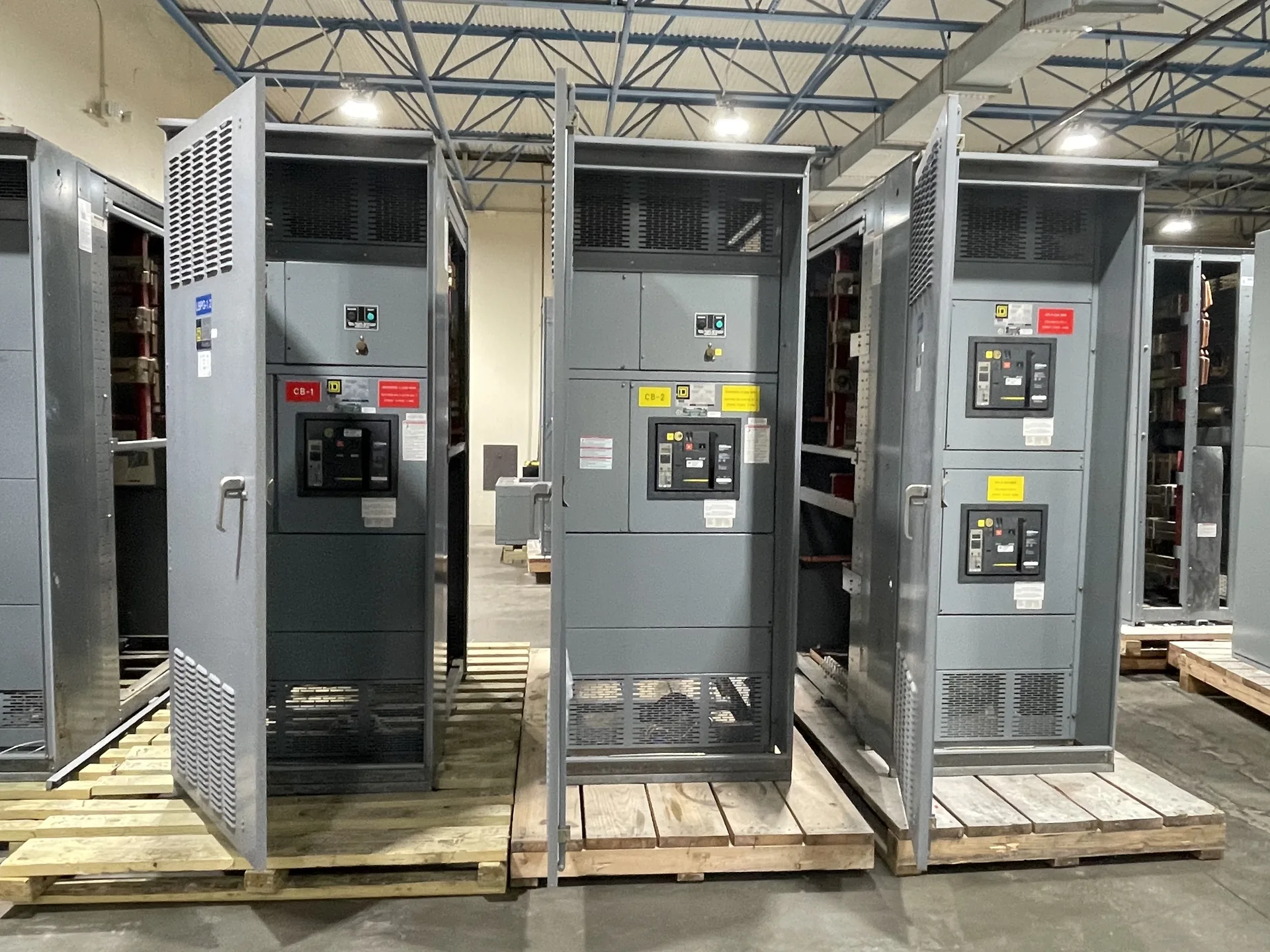
Power distribution, with purpose.
Corrosion protection for electrical distribution equipment starts with the atmosphere at the installation point, not a paint color chosen from a catalog. Moisture, salts, industrial chemicals, cleaning agents, and airborne dust can attack enclosures, hardware, bus connections, or cable interfaces at different rates. A finish that protects an exterior surface may not address condensation inside a cabinet or corrosion at a damaged edge. The design decision therefore needs exposure data, equipment details, thermal review, and a maintainable inspection plan. Final material selection and work practices should be confirmed by qualified project professionals.
Describe the exposure at the equipment location
Begin with the actual installation environment and how it changes over time. Record whether equipment is indoors or outdoors, sheltered or exposed to wind-driven rain, and near road salt, coastal salt, process chemicals, fertilizer, wastewater, or frequent washdown. Include temperature and humidity ranges, seasonal condensation, airborne contaminants, and cleaning products. In Dallas–Fort Worth, for example, a project team should document the specific site conditions rather than assume that a regional climate alone determines the corrosion risk. An indoor electrical room beside a chemical process may be more demanding than a sheltered outdoor location.
Useful source information includes the site environmental assessment, process-safety or chemical-handling documentation, facility maintenance procedures, washdown schedules, and records of corrosion on nearby equipment. Identify contaminant names and concentrations when available, how often they are present, and whether exposure is continuous, intermittent, or associated with shutdown cleaning. Note salt spray, standing water, roof leaks, and ventilation paths. If measurements are unavailable, state the uncertainty explicitly so the engineer can decide whether to collect data, apply a conservative design basis, or provide a review point before equipment release.
Match enclosure construction and finish to the exposure
A coating system is only one part of corrosion resistance. Enclosure base material, coating preparation and thickness, edge coverage, seams, fasteners, hinges, door hardware, and mounting interfaces all affect durability. A finish selected for general indoor service may be unsuitable where chemicals contact surfaces or where salt and moisture accumulate. Conversely, specifying an aggressive coating without considering compatibility, repair methods, or enclosure function can add cost without addressing the weakest interface. The specification should identify the exposure basis and required finish performance, not rely on an undefined phrase such as “corrosion resistant.”
Possible approaches include a suitably selected painted enclosure, a corrosion-resistant metallic material, or a protective treatment chosen for a particular chemical and cleaning regime. Each has tradeoffs in cost, fabrication, availability, repairability, and compatibility with installed components. Confirm that the selected material and coating can be applied to the proposed enclosure design and that cut edges, drilled openings, and field modifications receive an approved treatment. Gaskets and seals also require review: chemical exposure or heat can degrade them even when the cabinet exterior remains intact. Project-specific ratings, materials, and standards must be confirmed for the order.


Review heat rejection, condensation, and interfaces
Sealing an enclosure more tightly against corrosive dust or washdown can reduce natural ventilation and increase internal temperature. Higher temperatures can affect component life, conductor temperature, protective-device performance, and the enclosure finish itself. Thermal review should use the actual equipment arrangement, loading assumptions, ambient conditions, ventilation openings, and any heat-producing accessories. If ventilation is needed, its path must be evaluated for contaminant ingress and water entry rather than treated as an isolated cooling choice. A filter or fan may require planned replacement and may not be appropriate for every exposure.
Condensation deserves separate attention from rain exclusion. Temperature cycling, humid air, cold surfaces, and shutdown periods can create internal moisture even in an enclosure that has no obvious leak. Review the room’s temperature control, drainage and mounting details, cable entry orientation, door seals, and any proposed anti-condensation measures with the responsible electrical and mechanical professionals. Pay particular attention to interfaces where dissimilar metals, exposed threads, unsealed penetrations, or trapped water may accelerate deterioration. The finish does not establish an equipment short-circuit rating, environmental rating, or suitability for a classified location.
Use a documented decision, not a finish assumption
Consider a hypothetical outdoor distribution assembly at a facility with intermittent salt-laden air, periodic rain, and routine cleaning. The design team first records exposure frequency, wash chemicals, local ambient conditions, enclosure loading, and the required electrical ratings. It then compares a coated enclosure with a more corrosion-resistant material, checking hardware, seams, cable entries, thermal performance, repair procedures, and component compatibility. If the site cannot provide chemical concentrations or exposure history, the decision remains conditional; the team may request additional data or specify a conservative option subject to engineering review.
The competing designs should be compared against a defined service-life objective and maintenance capability, not just initial appearance. A more protective material or finish may reduce some corrosion mechanisms but can raise procurement, fabrication, or repair constraints; a conventional coated design may be workable where exposure is controlled and inspection is reliable. Neither option is universally superior. The purchaser should supply the one-line diagram, equipment ratings, load and ambient assumptions, installation drawings, exposure description, required finish specification, applicable project standards, and any US-origin or sourcing requirements when requesting a quote. Availability and compliance details require confirmation for the specific order.
Specify inspection evidence and preserve the design basis
The equipment specification and submittal package should make the corrosion decision traceable. Relevant records may include the environmental design basis, enclosure and finish descriptions, general-arrangement and outline drawings, material or coating documentation where specified, interface details, thermal assumptions, and approved deviations. Drawings should show mounting, clearances, penetrations, cable entry points, and any ventilation or drainage features that affect exposure. A finish schedule should clarify which surfaces and accessories are included rather than implying that every component has identical protection.
Inspection criteria should focus on observable changes that could compromise protection or operation: coating damage, rust at edges or fasteners, blistering, peeling, seal deterioration, water tracks, blocked ventilation, and corrosion at bonding or connection interfaces. Establish inspection intervals and acceptance actions through qualified site personnel based on the environment and manufacturer guidance. Do not treat an exterior visual check as proof that internal connections are sound, and do not open energized equipment for inspection. Any internal examination, cleaning, repair, or work practice must follow site safety procedures and be directed by qualified professionals.
State what the corrosion conclusion does—and does not—cover
A finish selection is a response to a defined exposure, equipment configuration, and maintenance plan; it is not a blanket guarantee against corrosion. Changes in chemical use, ventilation, cleaning frequency, enclosure location, or operating temperature can invalidate the original assumptions. Project engineers should verify the applicable code interpretation, environmental and enclosure requirements, electrical ratings, short-circuit capability, and component suitability. UL 891 applies to low-voltage switchboards where applicable; it should not be presented as a general corrosion certification or as a listing for medium-voltage equipment.
A manufacturer can evaluate a custom build and supply new equipment, with American components and shorter lead time as a goal where project requirements and component availability allow. No specific finish, material, listing, lead time, or standard compliance should be assumed before review. The final conclusion is limited to the documented conditions and approved design. When exposure data is incomplete or the service environment can change, record that limitation in the project documents and obtain qualified engineering review before release, installation, or changes to operating and maintenance practices.
Specifications & planning
Review the details that matter for your application. Final specifications and availability should be confirmed for your project.
| Evaluation factor | Information to document |
|---|---|
| Atmosphere | Contaminants, concentration, duration, moisture, and cleaning exposure |
| Enclosure and finish | Base material, coating scope, hardware, seams, and repair approach |
| Thermal conditions | Ambient range, loading assumptions, heat sources, and ventilation path |
| Inspection basis | Observable damage criteria, records, interval, and qualified review |