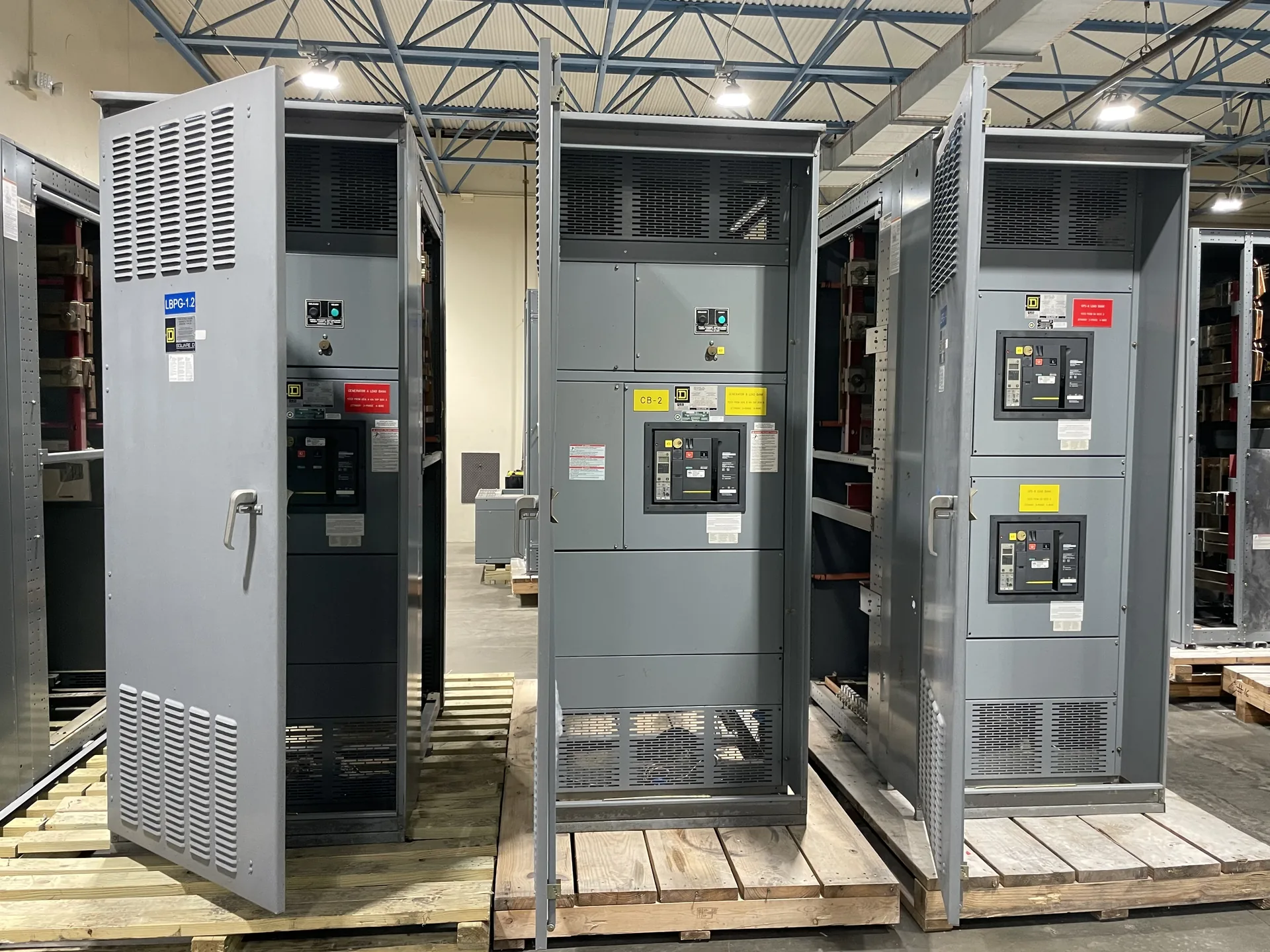
Power distribution, with purpose.
An equipment submittal review is a coordinated design check, not simply a search for matching catalog numbers. Its purpose is to confirm that the proposed distribution equipment fits the project’s electrical, physical, operational, and documentation requirements before the design is released for procurement or construction. Owners, engineers, contractors, and the equipment manufacturer each contribute information, but the engineer of record and other qualified professionals retain responsibility for design judgments, code interpretation, and final settings.
Start with a controlled set of project inputs
The review should begin with the current specifications, one-line diagram, load information, and project criteria—not an isolated equipment schedule. Useful source data includes system nominal voltage, phase and frequency, available fault current at the equipment, grounding method, service and feeder loads, required continuity, environmental conditions, and the authority having jurisdiction. The engineer should also identify whether the scope is a low-voltage switchboard, switchgear, or another assembly, since terminology and applicable standards depend on equipment type and voltage class.
The owner supplies operating priorities, expansion expectations, utility interface information when available, and any requirements for metering, communications, maintainability, or spare capacity. The contractor supplies installation constraints such as room dimensions, access routes, conduit or busway entry, and construction sequencing. The manufacturer needs the applicable drawings and specification sections, requested ratings, device and accessory schedules, delivery destination, and required submittal format to prepare a meaningful quote. For a Dallas–Fort Worth project or a shipment elsewhere in the United States, the same project-specific inputs matter; service to a region does not establish a local manufacturing location.
Review at milestones before details harden
A useful workflow has distinct checkpoints. During design development, the engineer establishes the distribution concept and documents preliminary loads, fault-duty assumptions, and major interfaces. At the specified design milestone, the equipment schedule and one-line should be stable enough to request a technical proposal. After award, the manufacturer’s drawings and component selections can be reviewed against the contract documents, with comments resolved before approval for production. A change to the one-line, utility data, or room layout after that point can require a documented re-review.
The review log should identify the drawing or specification revision, reviewer, date, comment, responsible party, and disposition. Comments should distinguish a required correction from a clarification, accepted deviation, or open assumption. This prevents an unanswered note from silently becoming a design decision. The contractor coordinates schedule and construction interfaces; the engineer evaluates technical acceptability; the owner resolves operational preferences or scope tradeoffs. A manufacturer can clarify its proposed equipment and identify information gaps, but should not substitute its judgment for the project’s licensed design authority.


Make electrical decisions from traceable data
Consider a hypothetical project where a preliminary one-line shows a low-voltage service switchboard, but the utility’s final fault-current letter has not arrived. The proposed assembly’s interrupting and short-circuit ratings cannot be accepted solely because they match an early schedule. The engineer should identify the fault-current source and study assumptions, then confirm the required equipment ratings and protective-device coordination with qualified professionals. Nominal system voltage and the equipment’s maximum rating are related but are not interchangeable; both must be checked against the actual system and specification.
Competing options may include a more compact arrangement with fewer sections or a layout with additional space for future feeders and easier access. The compact option can reduce footprint but constrain later expansion or cable routing; the larger option may require more room and affect cost or delivery. The decision should compare documented loads, spare provisions, working-space constraints, maintenance needs, and the owner’s expansion plan. Any example selection remains subject to engineering review. Ratings, short-circuit capability, component availability, applicable standards, and any U.S.-origin requirement must be confirmed for the specific order rather than inferred from a general product description.
Check drawings and interfaces as a package
A complete review commonly includes the equipment arrangement and dimensions, front elevation, one-line or elementary diagrams as applicable, connection and terminal information, device schedules, nameplate data, and wiring or control diagrams needed for the project. The reviewer should compare these documents with the contract one-line, feeder and load schedules, protection requirements, and specification. The goal is to find mismatches such as a feeder shown on one document but omitted from another, a control-power assumption that has no source, or a cable entry that conflicts with site routing.
Mechanical and construction interfaces deserve the same attention as electrical selections. Confirm shipping splits, lifting and handling information, enclosure conditions, access and working clearances, floor or housekeeping-pad assumptions, and the intended entry side for conductors. Coordinate adjacent transformers, generators, transfer equipment, metering, and communications so responsibilities at each boundary are clear. The review does not establish that field conditions match the drawings; the contractor must verify site dimensions and installation conditions through the project’s approved process.
Close comments without crossing field boundaries
Before release, the record should show the reviewed submittal revision, consolidated comments, responses, approved deviations, unresolved items, and the disposition of each comment. Retain the governing specification and drawing revisions, final approved equipment documents, and later changes in the project’s document-control system. If a revised drawing affects dimensions, devices, control wiring, or ratings, reviewers should identify which earlier decisions need to be reopened rather than treating every revision as administrative.
Submittal approval is not a substitute for installation verification, commissioning, protective-device settings, or safe work planning. Field personnel should work within their qualifications and approved procedures; energized tasks and boundaries require assessment by qualified professionals under applicable rules. Final settings, code interpretation, and installation work practices belong to the responsible qualified professionals and authorities, not to a general equipment submittal conclusion. A manufacturer may build new custom equipment using American components and may work toward a shorter lead time, but schedule, component availability, assembly requirements, and any applicable UL 891 scope must be confirmed for the particular order. UL 891 applies to low-voltage switchboards, not medium-voltage equipment.
Specifications & planning
Review the details that matter for your application. Final specifications and availability should be confirmed for your project.
| Evaluation factor | Review question |
|---|---|
| Source data | Are utility fault-current and load assumptions current and traceable? |
| Electrical fit | Do nominal voltage, equipment rating, and documented fault duty align? |
| Physical interface | Do dimensions, access, entries, and shipping splits suit verified site constraints? |
| Documentation | Are comments, deviations, revisions, and final dispositions recorded? |