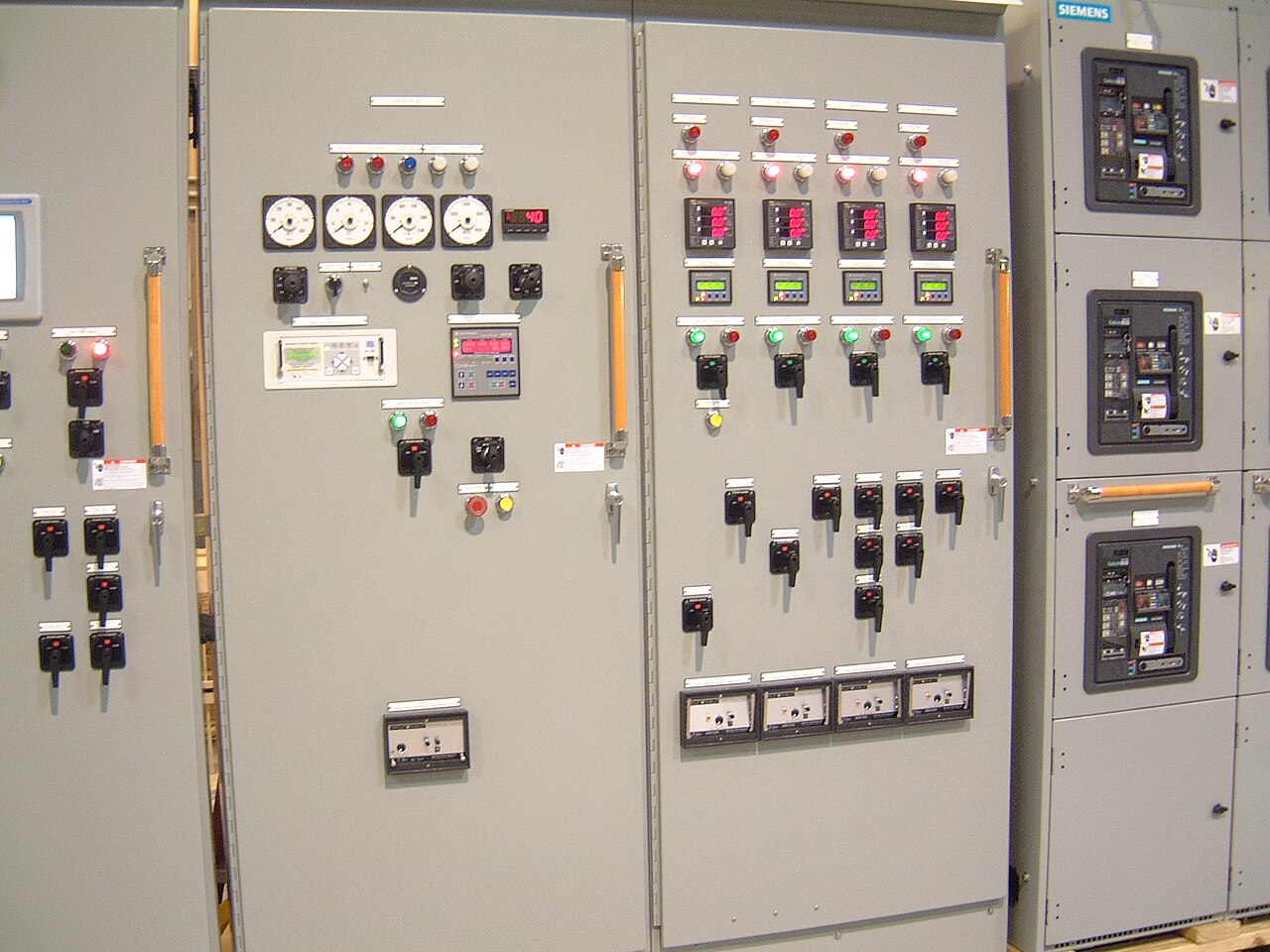
Power distribution, with purpose.
An airport terminal, maintenance hangar, rail hub, or transit operations center may depend on several electrical systems with different operating schedules and consequences of interruption. Consider a hypothetical regional aviation and transportation campus: terminal loads, baggage handling, airfield support, vehicle charging, workshops, and control systems all compete for capacity and require carefully coordinated distribution. Selecting switchgear starts with the facility’s operating and electrical data, not simply a preferred lineup. New custom-built equipment can be specified for the intended application, with project requirements and component availability confirmed before an order is finalized.
Translate continuity goals into a distribution arrangement
“Keep operations running” is not a complete electrical design requirement. In the hypothetical campus, losing power to a public concourse may create a different operational problem from losing a baggage conveyor, a maintenance bay, or a transportation control room. The owner and design team should identify which loads may be interrupted, which require an alternate source, and how much transfer time each function can tolerate. Those decisions influence whether the distribution uses separate sections, feeder arrangements, alternate sources, or other project-specific methods of managing outages.
A switchboard or switchgear lineup does not itself guarantee uninterrupted service. Continuity depends on the sources, upstream and downstream equipment, transfer scheme, controls, and operating procedures working together. The specification should show the one-line diagram and define normal and alternate operating states, including what happens during maintenance or loss of a source. For a facility in Dallas–Fort Worth or elsewhere, the same disciplined review applies: confirm the actual utility and site design rather than assuming that a familiar regional arrangement will fit.
Build the equipment specification from site data
A useful request for quotation gives the manufacturer enough information to evaluate the electrical application. Provide the latest one-line diagram, system nominal voltage, frequency, phase and wire configuration, available fault-current study, and the required equipment short-circuit rating. Identify main and feeder currents, source and tie arrangements, grounding method, protective-device preferences, metering needs, and any required communications or control interfaces. Also state applicable project standards, environmental conditions, and the intended indoor or outdoor installation.
Nominal system voltage and equipment maximum voltage rating are related but not interchangeable specification fields. The design engineer should identify both as needed for the application, along with the available fault current and the method used to establish the required short-circuit withstand or interrupting ratings. Component availability, ratings, applicable standards, and any U.S.-origin requirements must be checked for the specific order. A quotation based on incomplete or preliminary data should be treated as conditional, not as confirmation that the final design is suitable.


Coordinate protection with the full power system
A transportation campus can combine utility service, generators, transformers, motor loads, and alternate feeds. Each source and operating mode can affect fault current and protective-device coordination. The project team should provide the current coordination and short-circuit studies, identify the devices upstream and downstream of the lineup, and state any required settings, trip functions, metering, or zone-selective features. A design review should check that protective-device choices address both equipment protection and the facility’s intended selectivity goals.
Controls deserve equal attention because they connect electrical behavior to operations. Specify how source status, breaker position, alarms, and metering are to be presented to the facility’s monitoring or building-management system, and identify the communication protocol and division of responsibility for interface design. Define interlocks and permitted operating sequences in the project documents. Any scheme involving automatic transfer, parallel sources, or remote commands needs engineering review for the actual system; a generic control description cannot establish safe operation or compatibility.
Fit the lineup to constrained, active facilities
Airports, stations, and vehicle facilities often have limited electrical-room space and strict access routes. Before equipment dimensions are fixed, confirm room layout, doorway and corridor clearances, elevator or loading constraints, floor loading, working clearances, cable entry direction, conduit locations, and the space needed to remove or replace components. A lineup that fits on a plan may still be difficult to deliver, position, connect, or maintain. Shipping splits and reassembly requirements should be coordinated with the building and electrical teams early.
Access planning also involves people and ongoing operations. Identify controlled areas, escort or badging requirements, permitted delivery windows, security procedures, noise or dust restrictions, and limits on blocking passenger, vehicle, or service routes. These conditions can affect packaging, shipment sequencing, and the site’s installation plan, but they should not be mistaken for a manufacturer commitment to provide installation. The purchaser should share the constraints before quotation and verify delivery assumptions, site readiness, and handling responsibilities with the parties assigned to perform that work.
Assign maintenance and operating responsibilities
Before procurement, establish who will own the equipment after turnover and who is responsible for inspection, testing, protective-device settings, records, and operating procedures. Facility staff may need access to drawings, device schedules, wiring information, and control descriptions that support planned maintenance. The specification should state what documentation is required and whether spare components, special tools, or training materials are part of the requested scope; none should be assumed without confirmation.
Maintenance planning should account for the location and consequence of an outage. A terminal or transit operation may have narrow windows for isolating equipment, while a hangar or service area may have different shutdown opportunities. The owner’s qualified personnel and engineering team should determine safe work boundaries and an outage plan; work on energized equipment is not a substitute for proper planning. Clearly assign responsibility for commissioning, acceptance testing, and future setting changes so that operational continuity does not depend on undocumented assumptions.
Prepare a quote package that supports engineering review
For a meaningful quote, send the one-line diagram and equipment schedule together with the electrical ratings, fault study, protective-device requirements, control and metering interfaces, and room and delivery constraints. Include the expected operating modes and identify loads with distinct continuity needs. State the applicable standards and any domestic-content or U.S.-origin clauses exactly as written in the project documents. If the design is still developing, label preliminary information and note which decisions remain open so that quotation assumptions can be made explicit.
The manufacturer builds and supplies new equipment, including custom configurations using American components where specified and available, with shorter lead time as a goal rather than a guarantee. UL 891 applies to low-voltage switchboards; it is not a general listing for medium-voltage switchgear, and no particular assembly’s listing or compliance should be presumed. Confirm the proposed equipment type, ratings, standards, component availability, and origin requirements for the specific order. Engineering review of the complete project documents is essential before final selection.
Specifications & planning
Review the details that matter for your application. Final specifications and availability should be confirmed for your project.
| Evaluation factor | Information to confirm |
|---|---|
| Continuity objective | Loads requiring alternate supply, allowable interruption, and operating modes |
| Electrical basis | System nominal voltage, equipment rating, available fault current, and required short-circuit rating |
| Protection and controls | Coordination study, protective-device functions, monitoring points, and interface protocol |
| Physical and delivery constraints | Room dimensions, access route, handling limits, security rules, and delivery windows |