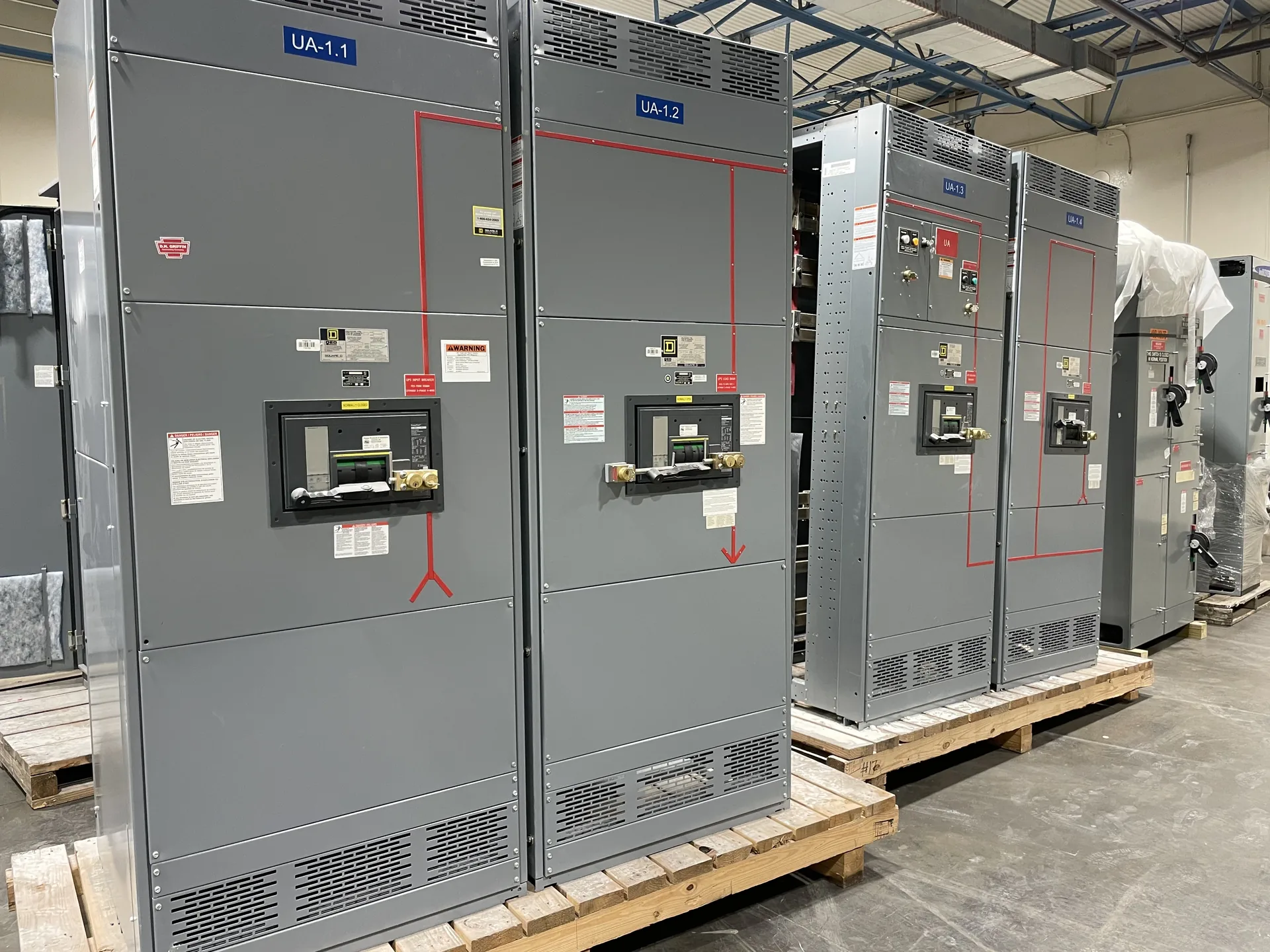
Power distribution, with purpose.
Remote monitoring can help operations teams see electrical conditions at an oil and gas facility without treating every signal as a control command. The useful design work is defining which alarms matter, how data may cross site boundaries, and who is authorized to act. Those choices affect switchboard interfaces, communications equipment, security review, and the information needed to specify new equipment.
Define alarms by operational consequence
Start with the event an alarm represents, not merely the point a device can expose. A breaker trip, protective relay target, loss of control power, abnormal temperature indication, and communications failure have different consequences and response paths. The owner and electrical engineer should agree on alarm priority, intended operator response, and whether a condition requires immediate attention, maintenance follow-up, or trend review. An alarm list should also distinguish a changing state from a persistent condition so repeated notifications do not obscure a developing issue.
The switchgear specification should identify the signals expected from each assembly and the source of each signal. Depending on the selected components and design, that may involve dry contacts, metering data, relay communications, or a gateway furnished by another party. Confirm signal naming, normal states, alarm reset behavior, time stamps, and loss-of-communications indication before purchase. Remote indication does not replace local protection or establish that an operator can safely control equipment remotely.
Set communications boundaries before choosing an interface
Oil and gas sites may connect electrical monitoring to a plant control network, a supervisory system, or a separately managed monitoring platform. The owner’s controls and cybersecurity teams should define which system is authoritative, what information may leave the electrical network, and whether any inbound commands are permitted. A monitoring-only boundary is materially different from a design that allows remote breaker operation or settings changes; the latter calls for explicit engineering, operational, and security approval rather than an assumption based on available device features.
Specify the physical and logical interfaces, including the expected protocol, network segregation, port ownership, addressing responsibility, and who supplies and configures gateways, switches, or fiber links. Confirm environmental and hazardous-area requirements for equipment located outside the switchgear lineup. Protocol compatibility alone does not establish secure integration, and a manufacturer’s equipment scope should not be assumed to include site network design, controls programming, or commissioning. Identify those responsibilities in the procurement documents.


Treat site security as a design input
Security requirements can shape enclosure details, access arrangements, cable routing, and the location of communications hardware. The facility owner should state any site rules for physical access, visitor or contractor authorization, locked compartments, tamper indication, and restrictions on removable media or service ports. For remote locations, also clarify who can reach the equipment during an alarm and whether communications loss must generate a local indication. These are site-specific decisions; a general equipment description cannot establish compliance with an operator’s security policy.
Cybersecurity review should address credentials, account ownership, update practices, logging, remote access methods, and the division of responsibility between the owner and each controls vendor. Avoid specifying an internet connection simply because remote visibility is desired. The facility may require a private network, one-way data transfer, or no off-site connection at all. The selected architecture should preserve protective functions if monitoring communications fail and should make clear that security controls and operating procedures remain under the facility’s governance.
Illustrative scenario: monitoring a remote pump station
Consider a hypothetical pump station whose operations team wants notice of a feeder breaker trip, a high-temperature alarm, and loss of communications at a staffed control center. The project team might decide that status and alarm data travel outward through an owner-approved gateway, while remote breaker commands remain disabled. That arrangement could reduce unnecessary trips to the site, but only if local protective devices continue to act independently and the operations team has a defined response when data becomes stale or unavailable.
Before specifying the switchgear, the owner would need to confirm the monitoring points, alarm priorities, network boundary, time synchronization source, and responsibility for gateway configuration. The electrical engineer would check that selected meters, relays, and control components can provide the required signals and that the assembly design accommodates their wiring and space needs. This example is not a completed project or a claim about a particular product; final interfaces and functions require review against the actual design and component selection.
Gather stakeholder inputs and settle tradeoffs
Useful inputs come from operations, electrical engineering, instrumentation and controls, IT or cybersecurity, maintenance, and procurement. Operations defines actionable alarms and acceptable response times. Engineering establishes system conditions, protection coordination, and equipment ratings. Controls and security teams define interfaces and access boundaries, while maintenance identifies diagnostic information and service constraints. Procurement should resolve scope gaps, documentation, testing expectations, and who owns integration before comparing proposals.
Tradeoffs include richer device data versus simpler integration, centralized visibility versus a restricted network boundary, and additional communications hardware versus space, wiring, and maintenance burden. More points do not automatically produce better monitoring if alarm ownership and response are unclear. A purchaser seeking new custom-built equipment should provide one-line diagrams, system nominal voltage, fault-duty information, load and environment details, required alarms, interface documents, applicable standards, and delivery constraints. Shorter lead time may be a goal, but component availability and engineering review affect the schedule.
Keep approvals and equipment ratings explicit
Remote monitoring does not authorize a change to protection settings, operating procedures, or switching authority. The facility owner and responsible engineers must approve control functions, cybersecurity architecture, alarm response, and any connection to plant systems. Confirm who reviews drawings, approves deviations, witnesses specified tests, and accepts final documentation. Those approval boundaries help prevent a monitoring scope from quietly expanding into an unreviewed control or safety function.
For a quote, identify whether the requirement is a low-voltage switchboard or another equipment class, and state nominal system voltage separately from the equipment maximum rating. Short-circuit ratings, components, standards, and any U.S.-origin requirements must be confirmed for the specific order. UL 891 applies to low-voltage switchboards where applicable, not medium-voltage classes such as 5 kV, 15 kV, 27 kV, or 35 kV. A manufacturer serving Dallas–Fort Worth and shipping nationwide can evaluate a new assembly against project documents, but no rating, listing, interface, or schedule should be presumed before review.
Specifications & planning
Review the details that matter for your application. Final specifications and availability should be confirmed for your project.
| Evaluation factor | What to define for the project |
|---|---|
| Alarm scope | Points, priorities, normal states, and operator response |
| Communications boundary | Permitted direction of data flow and responsible network owner |
| Security requirements | Physical access, credentials, logging, and remote-access policy |
| Equipment basis | System voltage, fault duty, applicable standards, and engineering review |