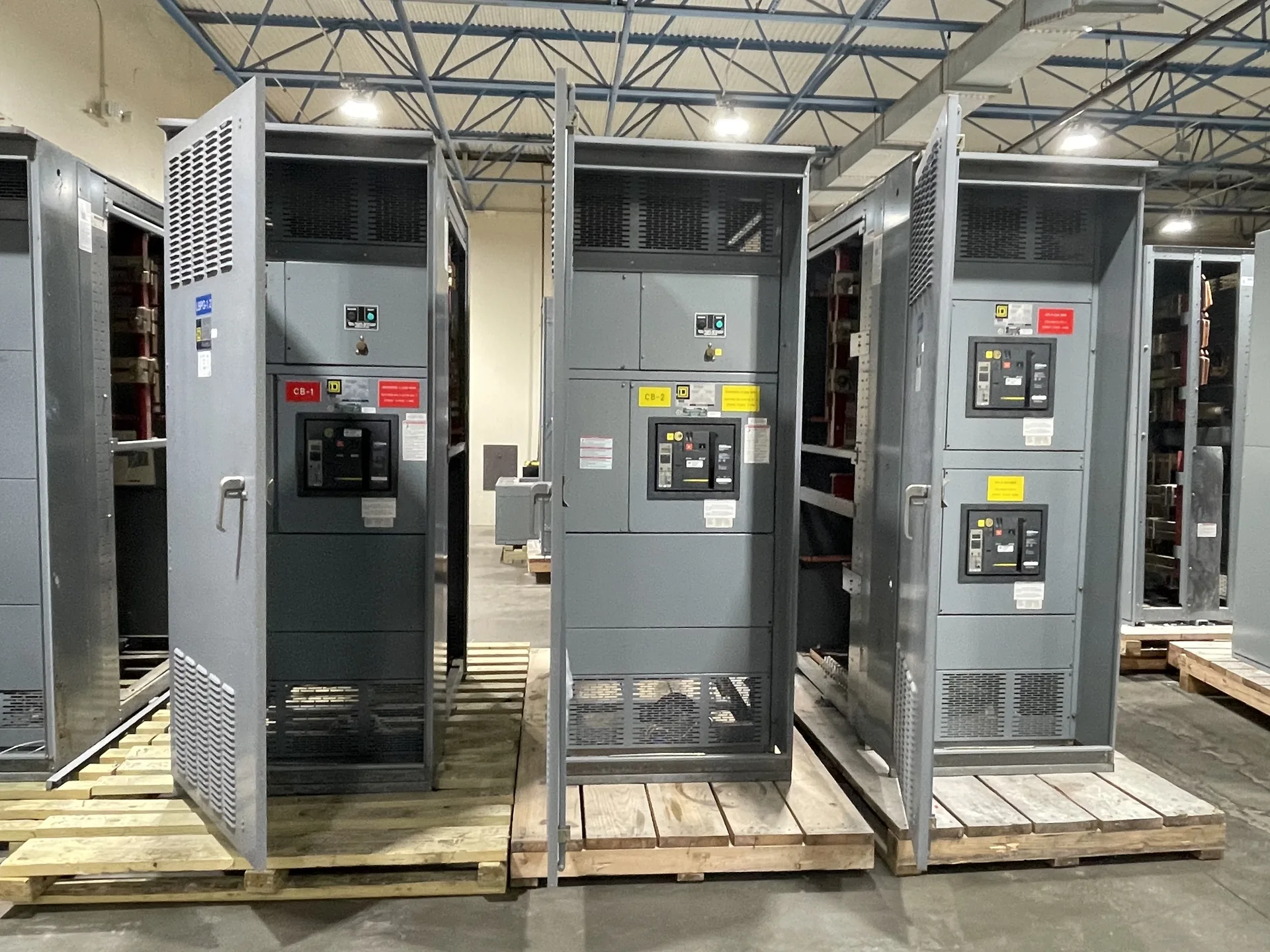
Power distribution, with purpose.
Condensation management for outdoor switchgear starts with the site, not with a heater selected from a catalog. Rain, humidity, temperature swings, solar exposure, enclosure design, and periods of low electrical load can combine to create moisture on internal surfaces. A useful specification identifies the exposure and operating conditions, then evaluates heaters, ventilation, drainage, and control power as coordinated design options. Availability and suitability must be confirmed for the specific assembly and order.
Identify where moisture can form
Condensation occurs when a surface becomes cooler than the dew point of the air inside an enclosure. Outdoor equipment may experience rapid changes as a cold front arrives, sunlight warms one side of a cabinet, or humid air enters during a door opening. Rain and wind-driven water are different exposure mechanisms: a heater may reduce condensation risk, but it does not replace suitable enclosure construction, seals, cable-entry details, or a site drainage plan. The specification should describe the actual environment rather than treating all outdoor locations as equivalent.
Useful inputs include the installation region, expected ambient temperature and humidity range, exposure to direct sun or prevailing wind, elevation, and whether the equipment is sheltered or fully exposed. Describe nearby cooling sources, washdown, dust, corrosive atmosphere, flooding potential, and the likelihood of standing water around the base. For a Dallas–Fort Worth installation, provide the project’s design-weather criteria and site conditions rather than relying on a general regional assumption. These details help determine which moisture controls merit review.
Compare heating and ventilation as design options
An enclosure heater can keep internal air and metal surfaces warmer, reducing the chance that moisture will condense during cold or damp periods. Design questions include heater location, quantity, mounting clearances, thermal control method, wiring protection, and whether the heater can operate when the main power circuit is de-energized. A thermostat or humidistat may be considered, but its sensing location and switching behavior matter: a sensor that does not represent the coldest or most moisture-prone area may not control conditions as intended. Component selection and availability require confirmation for the specific build.
Ventilation can exchange internal air with outdoor air, but that exchange may introduce humid air, airborne contaminants, or water unless the arrangement is appropriate to the environment. Natural or powered ventilation, filters, louvers, and any protective devices therefore need review against enclosure construction and the intended degree of environmental protection. Heating and ventilation are not automatic substitutes for one another, and combining them can add control complexity or energy use. The purchaser and design team should establish the objective—limiting condensation, controlling heat, or both—before choosing an approach.


Treat control power as part of the moisture design
A heater that loses its control supply when the switchgear is shut down may be unavailable during the very period when the enclosure cools and condensation risk rises. Confirm the source, nominal voltage, frequency, available capacity, and operating state of control power, including whether it remains available during an outage or maintenance condition. If a separate supply is proposed, define its origin, disconnecting means, overcurrent protection, grounding, wiring route, and responsibility for providing and connecting it. These interfaces should be resolved before drawings are finalized.
Controls also need defined operating limits and a clear relationship to alarms or remote monitoring, if those functions are required. Ask whether heater status, loss of control power, or abnormal enclosure conditions need indication, and identify the destination and signal requirements. The design review should consider simultaneous loads, protective-device coordination, and the effects of adding a control circuit to the assembly. Do not assume that a particular heater, sensor, alarm point, or control-power arrangement is standard; verify configuration and component availability for the order.
Representative scenario: a damp, lightly loaded enclosure
Consider a hypothetical outdoor assembly at a site with humid nights, cool seasonal weather, and light electrical loading for extended periods. The internal equipment may generate little heat, while temperature changes and moist air create conditions for surface condensation. A design review might compare a controlled heater with an approach that also addresses air exchange, cable-entry sealing, and drainage. This is an illustrative scenario only, not a completed project or a claim about a specific product configuration.
The review would establish which surfaces and compartments need protection, whether the heater can remain energized independently of the main load, and how the proposed control behaves during loss of supply. It would also examine ventilation openings and enclosure details for the stated exposure, then check control-power capacity and protection. The tradeoff is not simply initial component count: energy consumption, maintainability, environmental exposure, control reliability, and the consequences of a failed heater or blocked vent all deserve consideration. Engineering review should determine whether the selected measures address the stated risk.
Coordinate the enclosure, switchgear, and site scope
Condensation controls touch several design boundaries. The switchgear supplier needs to coordinate heater placement and wiring with bus, barriers, relays, instruments, cable space, and access for inspection. The enclosure design must account for openings, seals, finishes, and drainage without compromising the intended construction. The project’s electrical engineer, enclosure or building designer, and installation contractor may each own different portions of control power, field wiring, conduits, foundations, and environmental requirements; the drawings and purchase documents should state those boundaries explicitly.
For a quote, provide the requested equipment type and configuration, system nominal voltage, required equipment ratings, one-line diagram, control schematics, enclosure and environmental requirements, site climate criteria, and any applicable project specifications. Include heater or ventilation preferences, control-power source and voltage, monitoring needs, interface points, delivery destination, and required submittal or approval stages. Nominal system voltage and equipment maximum rating are distinct; all ratings, short-circuit values, components, standards, and any U.S.-origin requirements must be confirmed for the specific order. The manufacturer builds and supplies new equipment, with custom builds and American components available as design goals subject to verification; shorter lead time is a goal, not a guarantee. UL 891 may apply to qualifying low-voltage switchboards, not medium-voltage equipment, and no specific assembly status should be assumed.
Set approval and maintenance expectations
Before release, review the proposed arrangement against the project’s environmental criteria, control schematics, protection requirements, and governing specifications. Resolve who approves deviations, who supplies external power and field devices, and who verifies site conditions. A quote or preliminary concept is not a substitute for approved drawings or engineering confirmation. Product availability, final component selection, and compliance requirements depend on the assembly and order, so they should be checked before procurement commitments are made.
After installation, the owner’s maintenance plan should include qualified inspection of enclosure seals, drainage paths, ventilation components, heater condition, control connections, and indicators where provided. The plan should follow the approved equipment documentation and applicable site procedures; it should not rely on opening energized equipment or bypassing protective controls. Reviewing moisture history and any observed internal dampness can inform future maintenance and design decisions, but changes to the assembly should be evaluated and approved by qualified personnel.
Specifications & planning
Review the details that matter for your application. Final specifications and availability should be confirmed for your project.
| Evaluation factor | Information to confirm |
|---|---|
| Moisture exposure | Ambient conditions, rain or washdown, humidity, contaminants, drainage, and enclosure siting |
| Heating option | Purpose, location, control method, operating state, and component availability |
| Ventilation option | Air-exchange objective, environmental exposure, protective details, and maintenance needs |
| Control power | Source, nominal voltage, capacity, availability during shutdown, protection, and interface ownership |