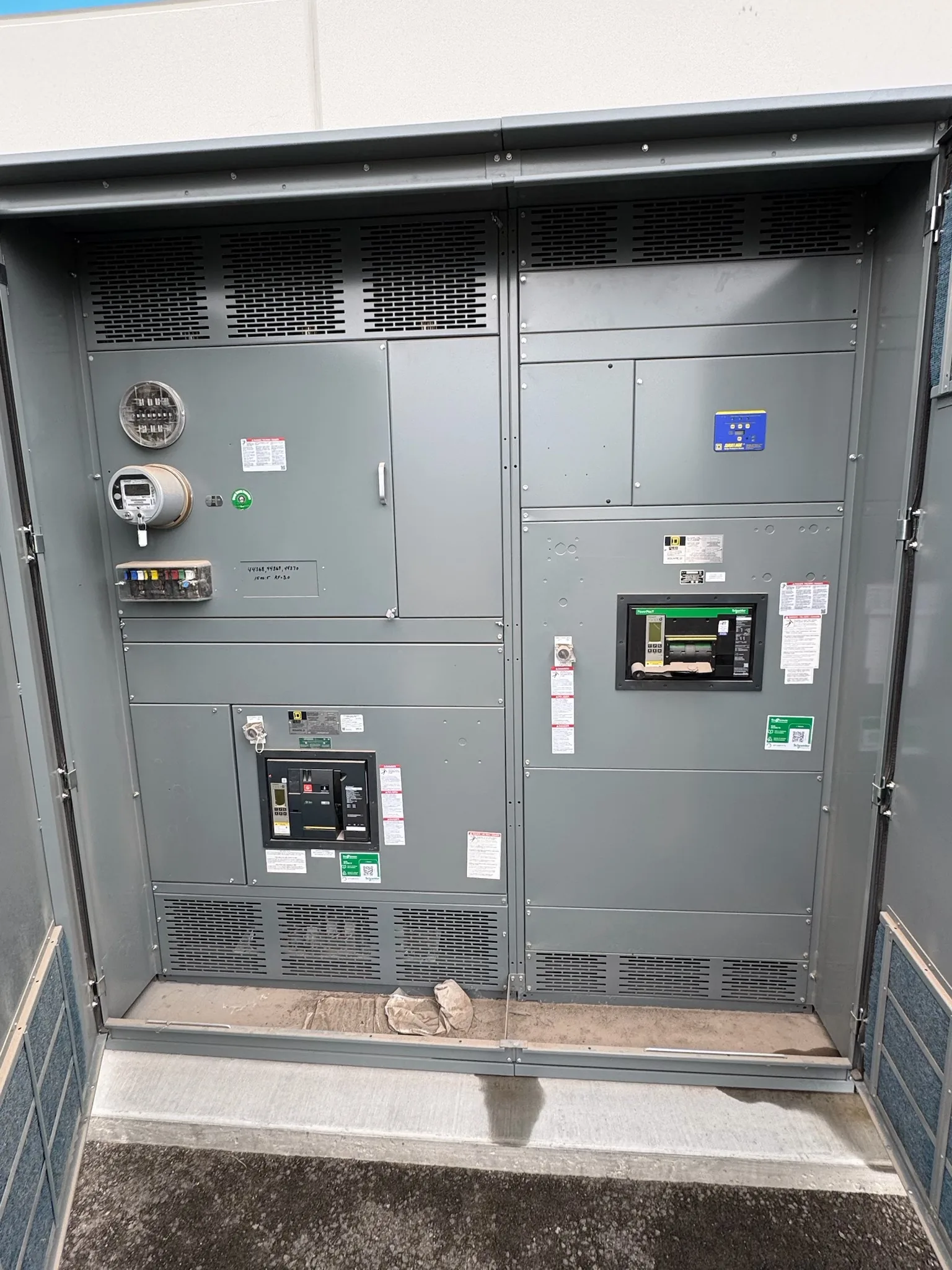
Power distribution, with purpose.
Branch monitoring makes a power distribution unit more informative by measuring selected outgoing circuits, but useful data depends on what is measured, how well it is measured, and where readings must go. Define those needs before specifying a monitoring package; available components and achievable performance must be confirmed for the particular new PDU design and order.
Choose outputs and measurements around the decision
Start with the operational question each reading should answer. A facility may want to identify heavily loaded branches, compare phases, investigate changes in demand, or allocate energy use among tenants or systems. Those goals do not automatically require the same measurements. A points list might call for branch current, voltage, real or apparent power, energy, power factor, frequency, or alarm status, but each point should have a defined use and destination.
Branch-level measurement is different from a single incoming-meter reading. Confirm whether the intended design monitors every outgoing circuit or only selected groups, and whether readings are per pole, per phase, or reported as a circuit total. Verify how the design handles multipole breakers, shared neutrals, and branch circuits with different configurations. The monitoring plan should match the panel schedule and actual wiring arrangement, rather than assume every branch is a simple single-phase load.
Specify measurement quality, not just display resolution
A screen showing several decimal places does not establish measurement accuracy. State the required accuracy or performance class for each quantity, the operating range over which it matters, and whether values are for operational awareness, energy allocation, or another purpose. These are different expectations. Measurement uncertainty can depend on sensing components, installation geometry, conductor size, load level, signal processing, and the conditions used for testing.
Ask how readings are obtained and documented for the proposed configuration, including the sensing method, supported conductor arrangements, and any stated accuracy conditions. Confirm whether a value is measured directly or calculated from other inputs, and whether the display or exported data is instantaneous, averaged, or accumulated. Do not treat branch-monitoring data as billing-grade or as a substitute for a separately specified revenue meter unless the application and equipment are explicitly reviewed and approved for that purpose.


Make the points list and communications path explicit
A complete points list should identify each monitored circuit by the project’s panel or branch designation and name every required value, alarm, and status. Include units, expected update intervals, data retention needs, and any thresholds that the owner wants configured. Clarify whether the PDU must provide local indication, remote monitoring, or both. Avoid specifying only “network capable”: the responsible controls team needs to know which data items are required and how they will be consumed.
Confirm the proposed communications protocol, physical connection, addressing approach, and responsibility for network configuration with the owner’s controls or IT team. Determine whether data will be read by a building management system, power monitoring platform, or another system, and who supplies gateways, network drops, licenses, and integration programming. Cybersecurity requirements may affect protocol choices, access controls, and network segmentation. Protocol compatibility alone does not guarantee that a third-party system will interpret every point or alarm as intended.
Review interfaces with protection and operations
Branch monitoring and branch-circuit protection serve related but distinct functions. A monitoring alarm can report a condition; it should not be assumed to trip a protective device or replace overcurrent protection. Define whether the monitoring package is read-only or must interface with other controls, and document any requested alarm relay, trip, or interlock separately. Such interfaces require engineering review of the protective scheme, control power, fail-safe behavior, and the consequences of loss of communications.
Plan access and maintenance with the PDU’s electrical design in view. Monitoring components must fit the intended assembly and branch layout without obstructing wiring, service access, or required clearances. Coordinate enclosure arrangement, heat and wiring considerations, labeling, and the data connection with the PDU design and project documents. UL 891 may apply to a low-voltage switchboard assembly when appropriate, but it does not establish the accuracy of monitoring data or certify a communications integration.
Use a representative scenario to expose missing requirements
Consider a hypothetical facility that wants to compare the loading of selected outgoing circuits in a new low-voltage PDU and send readings to an existing monitoring platform. The owner might request current and energy for named branches, local identification that matches the panel schedule, and alarms for configurable loading thresholds. Before choosing components, the design team would confirm circuit poles, phase arrangement, expected loads, required reporting intervals, and whether energy values are for operational trending or a formal allocation process.
The scenario also exposes tradeoffs. Monitoring every branch may provide broader visibility but can add sensing components, points, wiring, configuration effort, and integration testing. Monitoring only selected circuits can reduce complexity, but later changes in operational priorities may leave gaps. A useful review compares the value of each point with its equipment and integration implications, then confirms the exact monitoring component availability and performance for the proposed build rather than treating the example as a guaranteed product configuration.
Prepare quote inputs and approval boundaries
For a quote, provide the one-line diagram, panel schedule, system nominal voltage and phase, requested PDU arrangement, branch-device details, and the monitoring points list. Include the required measurement performance, communications protocol and interface requirements, environmental conditions, applicable project specifications, and any requested documentation or testing. Identify who owns network hardware, programming, integration, and acceptance testing. These inputs help distinguish the switchboard or PDU supply from controls work that may sit outside the equipment scope.
The manufacturer builds and supplies new equipment, including custom configurations using American components when specified; shorter lead time is a goal, not a guarantee. Customers in Dallas–Fort Worth and elsewhere should submit project requirements for review rather than assume a particular branch-monitoring package is universally available. Ratings, short-circuit requirements, component availability, standards, country-of-origin requirements, and final scope must be confirmed for the specific order. The purchaser and project engineer should approve the points list, data expectations, interfaces, and acceptance criteria before release.
Specifications & planning
Review the details that matter for your application. Final specifications and availability should be confirmed for your project.
| Evaluation factor | What to define |
|---|---|
| Coverage | Selected branches or all outgoing circuits; confirm poles and phases |
| Measurement purpose | Operational trending, load awareness, or another stated use |
| Data interface | Required protocol, points, update needs, and integration owner |
| Performance | Requested measurement quality and conditions; subject to engineering review |