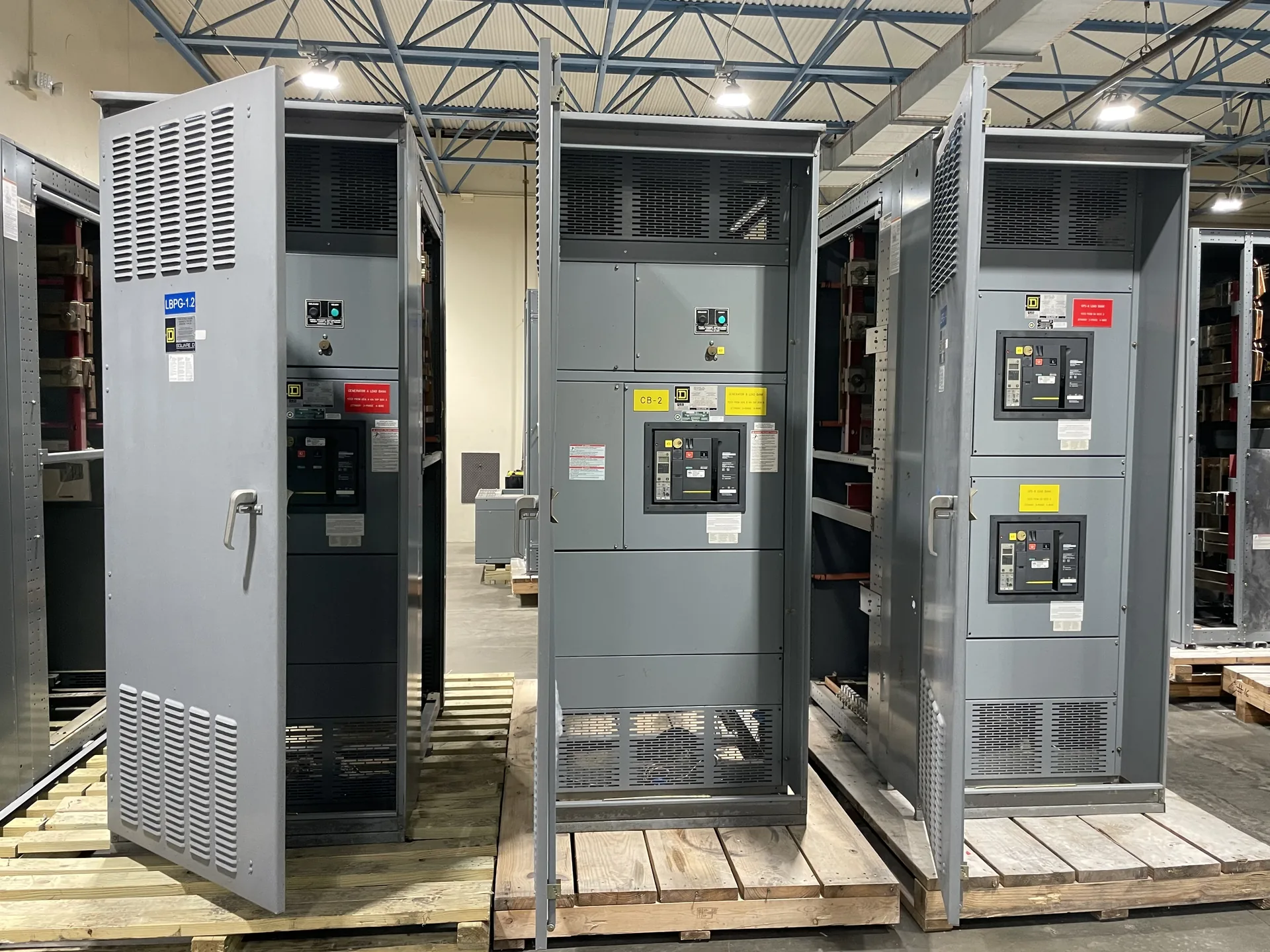
Power distribution, with purpose.
Power distribution unit configuration starts with the loads and the electrical source, not a catalog label. Define how power enters, whether voltage transformation is required, how each output is protected and monitored, and where the unit must fit. Those choices affect coordination, heat, access, and the information needed for a sound quotation.
Define the source and the load profile
Describe the source feeding the PDU, including system nominal voltage, phase, frequency, grounding arrangement, available fault-current information, and whether the source is utility, generator, UPS, or another distribution assembly. Identify the upstream device and connection method, along with any bypass or redundant-source requirement. These details establish the configuration boundaries; equipment maximum ratings and short-circuit ratings must be selected and confirmed for the specific order rather than inferred from nominal voltage alone.
For the outputs, provide the connected equipment list, load voltage, phase, anticipated current, receptacle or hardwired connection needs, and expected growth. Distinguish continuous loads from intermittent demand and identify sensitive or critical loads that need separate circuits or monitoring. A load schedule that groups circuits by destination is more useful than a single aggregate kilowatt figure because it helps define branch protection, spare capacity, and the monitoring points that operators will actually use.
Decide whether transformation belongs inside
A PDU may distribute the incoming voltage directly, or include a transformer when downstream loads require a different voltage or isolation arrangement. Specify primary and secondary system nominal voltages, transformer kVA basis, winding and grounding requirements, impedance constraints if known, and any harmonic-producing loads such as variable-speed drives or power electronics. Confirm whether the transformer is part of the requested assembly or supplied separately; that boundary changes enclosure layout, connection details, thermal design, and coordination responsibilities.
Transformation can simplify downstream distribution, but it adds mass, heat, and physical volume and can affect fault-current levels on the secondary side. A transformerless arrangement may reduce those burdens when loads already match the source, but it does not resolve grounding or voltage compatibility questions by itself. A representative design scenario might be an IT room with a source that differs from the voltage required by rack equipment: an integrated transformer and separately protected output circuits could be considered, subject to engineering review of load, fault duty, cooling, and installation constraints. This is an example, not a claimed project or standard product configuration.


Choose output protection and coordination interfaces
Specify the number and type of outgoing circuits, expected branch currents, poles, trip characteristics where applicable, and the desired allocation of spare positions. State whether outputs terminate in breakers, fused devices, receptacles, or another defined method, and identify any required isolation or disconnecting functions. The selected devices must suit the load and the available fault current, while their settings and characteristics must be reviewed against upstream protection to address selective coordination where the project requires it.
Configuration also depends on what connects to the PDU and who owns each interface. Provide the upstream switchboard or source-device information, downstream panel or equipment requirements, cable-entry direction, conductor limits, and any control or alarm connections. Identify whether the project expects a PDU supplier to provide only the assembly or also components, drawings, testing documentation, or coordination data. Scope and approval boundaries should be explicit: system design, field wiring, installation, settings, and final acceptance may be assigned to different parties and should not be assumed included.
Match metering to operational decisions
Choose measurements based on how the unit will be operated: total input current and voltage, transformer measurements where applicable, branch-level current, energy, power, or power quality. Define display location, communications protocol, network connection responsibility, alarm thresholds, and whether data must reach a building-management or power-monitoring system. A meter with more measurements is not automatically more useful if the project has not identified who will interpret the data or how it will be integrated.
Metering can expose overload trends and uneven loading, but it does not replace circuit protection or a validated load study. Clarify whether measurements are required at the input, output branches, or both, and whether remote communications are in the equipment scope or by others. For a quote, supply preferred meter functions and interface requirements without assuming a specific meter, protocol, or feature is available; component selection and compatibility must be confirmed for the order.
Account for heat, access, and footprint
Provide the allowable width, height, depth, service clearances, room temperature range, ventilation constraints, and delivery-path limitations. Include the intended mounting arrangement, enclosure environment, cable routing space, and whether doors must open into a constrained aisle. For Dallas–Fort Worth facilities or projects elsewhere, these are site-specific planning inputs; serving a region does not imply a local manufacturing location or establish site conditions.
Heat depends on the actual component arrangement and loading, particularly when a transformer is included. Ask for heat-loss information for the proposed configuration when room cooling or ventilation calculations depend on it, and confirm that the enclosure arrangement preserves the required access and service space. A smaller footprint can increase congestion or complicate cable bending and maintenance, while a larger enclosure may conflict with the room layout. Dimensions and thermal information should therefore be reviewed together, not treated as independent selections.
Prepare a reviewable quotation package
A useful request for quotation includes a one-line diagram, source and load schedules, system nominal voltages, available fault-current data, transformer requirements if any, output-circuit schedule, metering preferences, enclosure dimensions, environmental conditions, and interface drawings. Note desired delivery timing as a project goal, required submittal milestones, and any applicable standards or domestic-content provisions. Custom builds using American components may be considered, and shorter lead time can be a goal, but component availability, origin requirements, standards applicability, and schedule must be verified for the specific order.
The manufacturer builds and supplies new equipment; a quotation is not confirmation that every requested device or configuration is available. Review proposed ratings, short-circuit capability, component selections, dimensions, heat data, and interfaces before approval. If the PDU is part of a larger distribution system, provide the responsible engineer’s coordination criteria and identify who approves the final design. Any applicable UL 891 requirements concern low-voltage switchboards and do not establish a general listing for every PDU or medium-voltage equipment; confirm the specific assembly’s applicable standards and status during project review.
Specifications & planning
Review the details that matter for your application. Final specifications and availability should be confirmed for your project.
| Evaluation factor | Information to define |
|---|---|
| Input source | Nominal voltage, phase, frequency, grounding, upstream device, fault-current data |
| Transformation | Required secondary voltage, load basis, grounding, integrated or separate scope |
| Output protection | Circuit count, load schedule, device approach, coordination requirements |
| Thermal and space | Room limits, clearances, cable entry, heat information needed for cooling review |